Tag Archives: Hatch

Genk Cosworth Part 1 – Sierra Sapphire RS Cosworth

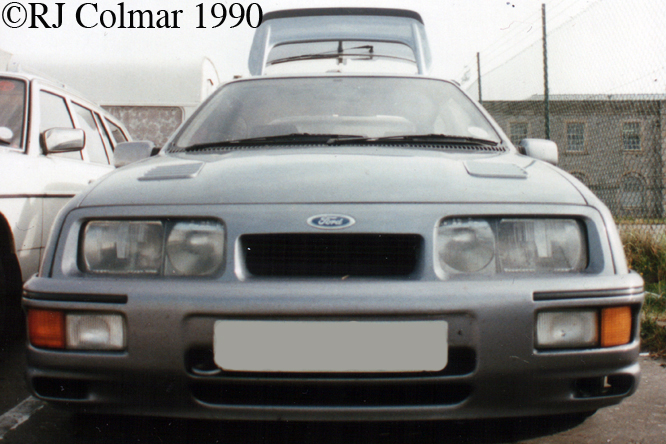
The second generation Ford Sierra Cosworths were all built in Genk, Belgium, with new 4 door bodies that were introduced with the 1987 Ford Sierra facelift, in Britain the 4 door Sierra was known as the Sierra Sapphire.
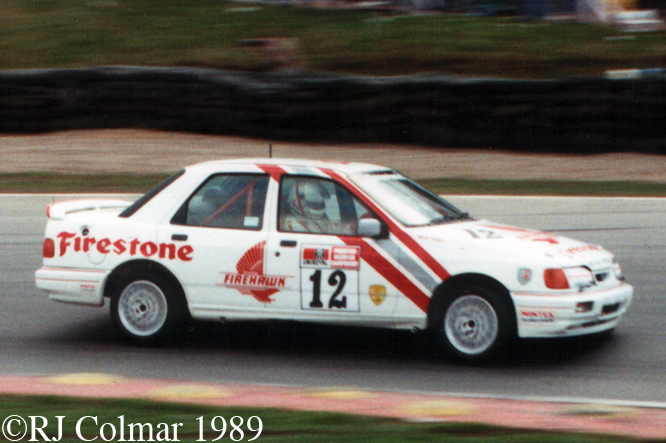
Ford Sierra Sapphire Cosworth RS, Brands Hatch

The Sierra Saphire RS Cosworth was positioned at the top of the Sierra performance tree, powered by the original 204 hp version of the Cosworth YBB motor, though with suspension set to favour comfort over over performance handling as in the original 3 door Sierra RS Cosworth.
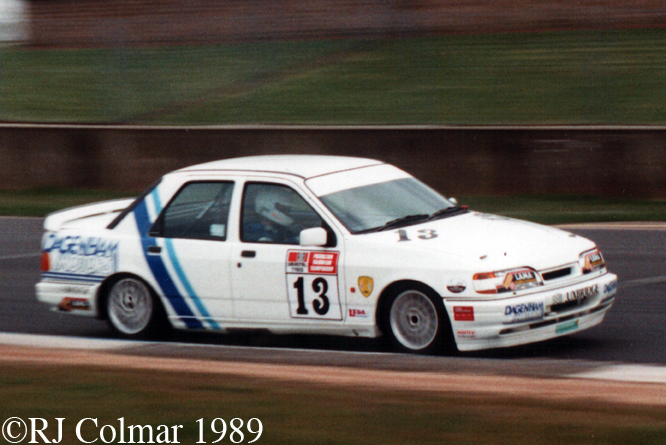
Ford Sierra Sapphire Cosworth RS, Donington

Despite losing the wild appeal of the original Sierra RS Cosworth the latter Sapphire’s performance did not really suffer with the road going version being independently timed by Autocar rest to 60 mph 5.8 seconds, 1/4 mile in 14.4 seconds up, to 100 mph in 15.8 seconds and with a top speed of 143 mph.
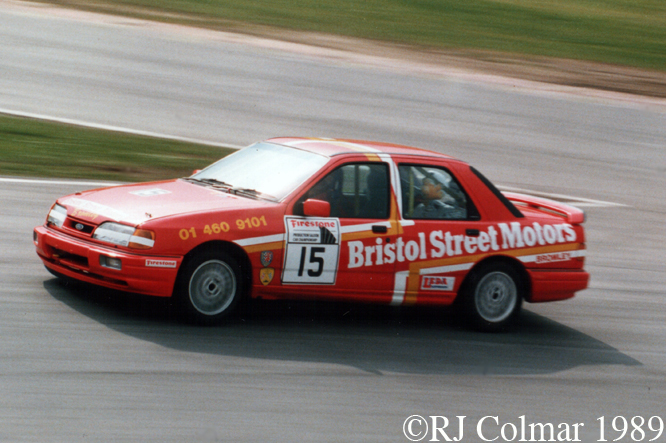
Ford Sierra Sapphire Cosworth RS, Brands Hatch

Unlike the earlier Sierra RS Cosworth and RS 500 evolution the Sierra Saphire RS Cosworth was built for Right Hand Drive and Left Hand Drive markets. Confusingly the LHD variant of the 4 door Cosworth was simply known as the Sierra RS Cosworth as had the original 3 door RHD version. From 1988 to 1989 around 13140 examples for both markets were manufactured.

Mark Hales is seen driving the #12 at Brands Hatch, Mark shared this car with ABBA drummer and sometime Grand Prix Driver and Truck racer Slim Borgudd to victory in the Willhire 25 hour race at Snetterton in 1989. Steve Monk is driving the #13 at Donington to a fourth place finish in a race won by Mark Hales while David Shead drives the #15 Bristol Street Motors Sierra Sapphire Cosworth RS at Brands Hatch.

Thanks for joining me on this ‘Genk Cosworth Part 1’ edition of ‘Gettin’ a li’l psycho on tyres’, I hope you will join me again tomorrow. Don’t forget to come back now !

Share

Losing Momentum – Ferrari 126C3 #066

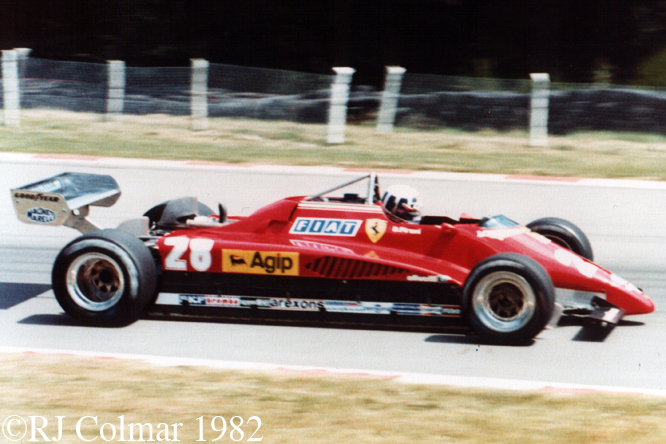
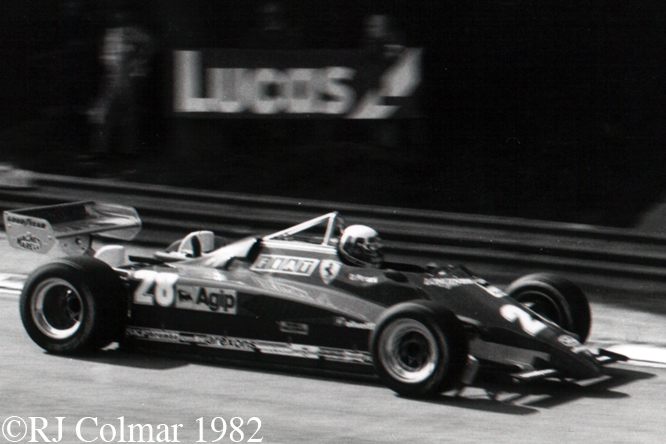
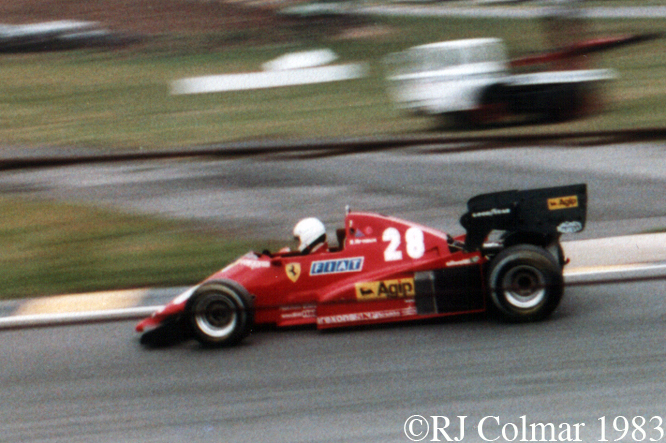
Entering the final two races of the 1983 World Championshp season Alain Prost driving for Renault had 51 points, René Arnoux seen here in the #28 Ferrari had 49 points and Nelson Piquet driving for Brabham had 47 points. Of the three René had all the momentum with him coming off a four race streak which included 2 wins in Germany and Holland driving chassis #066 seen here and 2nd places in Austria and Italy.

Ferrari 126 C3, European Grand Prix, Brands Hatch

At the European Grand Prix held at Brands Hatch Piquet qualified 4th, Arnoux, seen during qualifying above and below, 5th and Prost 8th. The race was won by Piquet now with 56 points, Prost came home 2nd bringing his total to 57 points while René failed to score with a 9th place finish. At the final race of the season Piquet secured his second championship with a third place finish while Prost and Arnoux both lost all momentum and recorded retirements.

Ferrari 126 C3, European Grand Prix, Brands Hatch

Ferrari easily won the constructors championship thanks largely to the woe full finishing record the 2nd drivers employed by Renault and Brabham who both scored more retirements than finishes through the course of the season while Ferrari’s nominal number 1 driver Patrick Tambay managed to win one race and secure 8 points paying finishes.

My memory of this event was that I started the week sunning myself by the Tyrrhenian Sea south of Naples in Italy and hitched hiked back to the UK via Wolfsburg in Northern Germany. I caught a train for the last part of the journey to Belgium which broke down meaning I missed my pre booked ferry and had to borrow the ferry fare from an incredibly cute girl from Nottingham. The ferry we caught was then trapped in a storm and instead of crossing the English channel it anchored off the Belgium coast until the storm blew itself out.

I made it back to the UK just in time to catch a nights rest before spending 6 hours in a 20 mile traffic jam trying to get into Brands Hatch, missing morning practice completely but just catching the last half hour of the final practice session when I took today’s photographs.

Thanks for joining me on this ‘Losing Momentum

Share

Toni Tickford – Ford Sierra RS500 Cosworth #159

In 1982 a set of regulations was introduced called Group A which required 5000 examples of a model to be certified as having been manufactured in order to qualify for the series. As we saw last week under the guidance of Stuart Turner, head of Ford Motorsport Europe, Ford developed the Ford Sierra RS Cosworth to take part in races for vehicles conforming to these regulations.

Ford Sierra Cosworth RS500, Castle Combe, C&SCAD

The Group A racing regulations also allowed for an evolution of the 5,000 base RS Cosworth models so long as at least 500 were sold to the public. Mike Moreton was charged with developing the Ford Sierra RS Cosworth into the 224 hp Cosworth YBD powered Ford Sierra RS Cosworth RS500 evolution.

Ford Sierra Cosworth RS500, Castle Combe, C&SCAD

In 1987 Tickfords were given the contract to build them, 392 black like build #159 seen here at Castle Combe, 56 white and 52 Moonstone blue, all of the Sierra RS Cosworth’s and RS500’s were right hand drive models.

Ford Sierra Cosworth RS500, Castle Combe, C&SCAD

The RS500, with nearly 500 hp in race trim proved to be an amazing success on the race track taking many overall victories and winning the European Touring Car Championship for Ford in 1988, however few Sierra RS500 Cosworth drivers won championships outright because Group A was divided into classes according to engine size and Class A for cars with the biggest motors was always far better subscribed than the classes for smaller vehicles.

Ford Sierra Cosworth RS500, Castle Combe, C&SCAD

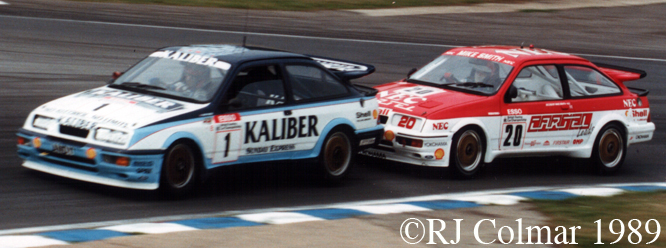
Andy Rouse in the #1 is seen leading Mike Smith in the #20 in a typically close fought round of the British Touring Car Championship in 1989 above, the #20 was a car supplied by Australian Dick Johnson one of the few RS500 drivers to win a championship he won the 1988 and 1989 Australian Touring Car Championships along with the 1989 Bathurst 1000.

Ford Sierra RS500 Cosworth, Brand Hatch

One of the all time best races I ever saw was at Brands Hatch in 1988 with Andy Rouse and Steve Soper driving an Eggenberger Sierra drove nose to tail for 20 thrilling laps of one of the best tracks in Britain, check it out on this link you will not be disappointed, I was there and have watched the race on youtube many times since.

Thanks for joining me on this ‘Toni Tickford’ edition of ‘Gettin’ a li’l psycho on tyres’, I hope you will join me again tomorrow. Don’t forget to come back now !
Share

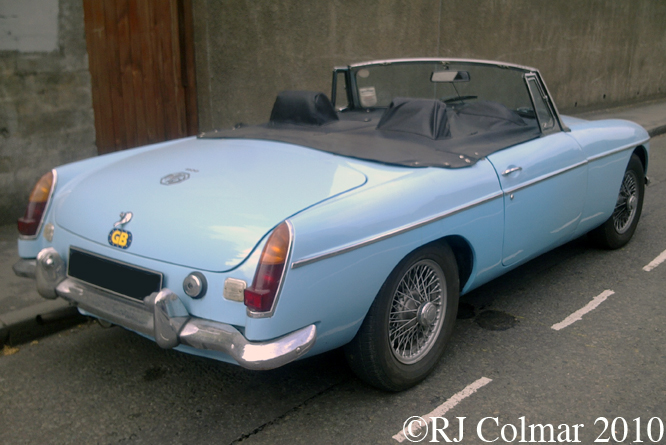
Everything Is Fresh – MG-B Roadster

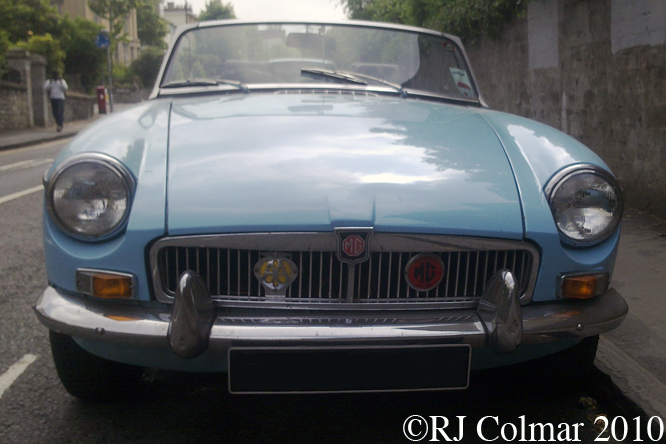
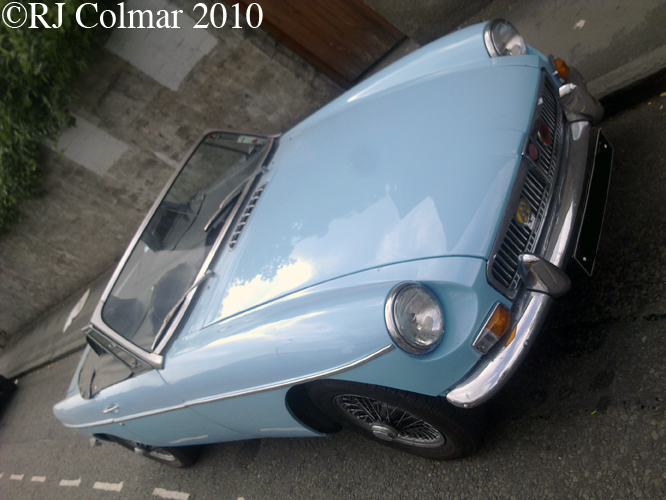
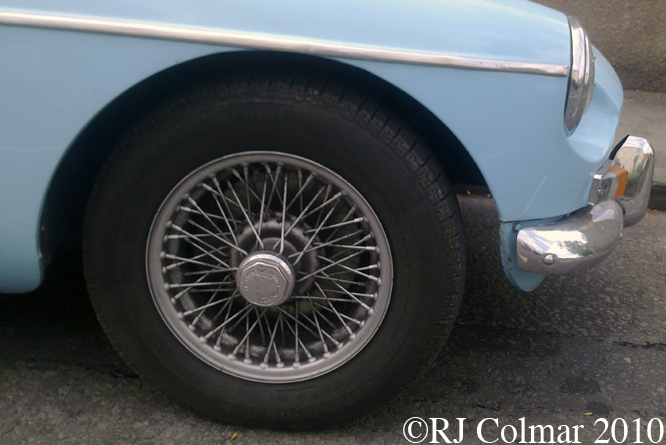
In 1962 MG replaced the MG-A with the MG-B roadster which featured unitary monocoque body construction.

MG-B

Despite being three inches shorter than the A series cars the MG-B had more interior space for the occupants and their luggage.

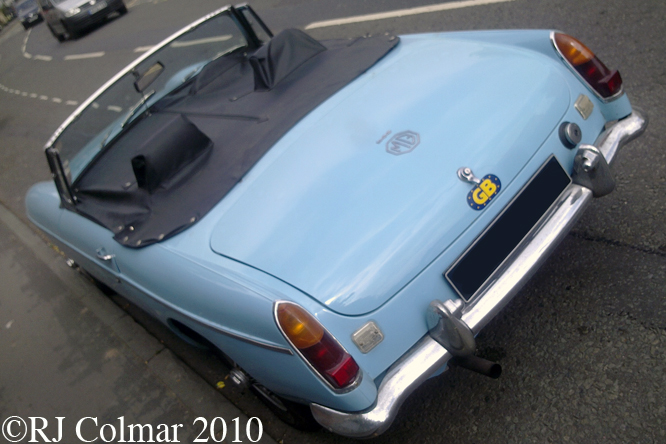
MG-B

Mk 1 models initially came with a 95 hp motor with a 3 bearing crankshaft which in 1965 was replaced by a 5 bearing crankshaft for improved reliability with no gain in power.

MG-B

The 95 horsepower motor coupled with softer suspension gave the car a higher, 100 mph, top speed and smoother than the MG-A which it replaced. The brakes of early MG-B’s are notoriously heavy to use because servo assistance was not added until 1975.

MG-B

MG-B’s of the ’67 – ’68 period seen here had 12 volt electrics courtesy of a pair of 6 volt batteries wired in series that were to be found behind the seats, making access difficult but aiding the handling. Windows that could be wound up and down was a novelty for the MG-B when it was launched.

MG-B

The only way of telling if this model is a MK1 or MK2 would be too look under the Tonneau to see if it has the flat topped transmission tunnel of the fully synchronized four speed Mk2 gearbox.

Everything was not quite as fresh about the MG-B as the brochure would have had us believe but the MG-B did prove to be another export success and competition success with a class win in the 1965 Monte Carlo Rally, 1966 Targa Florio and Spa 1000 kms and outright wins in the 1965 Guards 1000 miles and at Brands Hatch and 1966 84-hour Marathon de la Route at the Nurburgring.

Thanks for joining me on this ‘Everything Is Fresh’ edition of ‘Gettin’ a li’l psycho on tyres’, I hope you will join me again tomorrow. Don’t forget to come back now !
Share

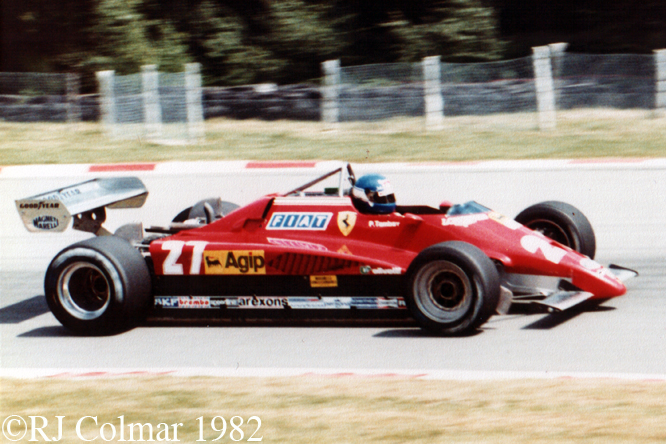
Just What the Doctor Ordered – Ferrari 126 C2 #061 & #060

Ferrari’s first attempt at designing a turbo powered Grand Prix car was described by lead driver Gilles Villeneuve in 1981 as handling like ‘a big red Cadillac‘.

Ferrari 126 C2, Brands Hatch

For the 1982 Ferrari hired Dr Harvey Poslethwaite, who had designed Grand Prix winning cars for both Hesketh and Wolf, to design the 126 C2 which would prove to be the class of the field or as Mario Andretti described it ‘the bomb’.

Ferrari 126 C2, Brands Hatch

Despite a lack luster start to the 1982 season for round 4 the San Remo Grand Prix Ferrari had got their act together and cruised to a comfortable One Two victory except for team leader Gilles Villeneuve there was a problem, he had been out fumbled by his team mate Didier Pironi which so enraged the Canadian he promised never to speak to Pironi again.

Ferrari 126 C2, Brands Hatch

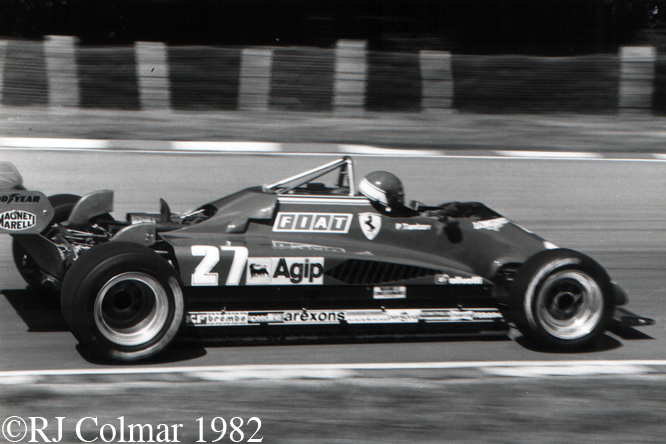
Two weeks later at the Belgium Grand Prix Gilles met his death after a practice accident, seemingly leaving Pironi seen in the #28 chassis #060 at Brands Hatch above, to win the 1982 Championship but then three weeks after these photographs were taken Didier Pironi was seriously injured an accident during practice for the German Grand Prix in chassis #060. Didier although eventually recovering never entered a Grand Prix car again and died in power boat racing accident in 1986.

Ferrari 126 C2, Brands Hatch

Patrick Tambay, seen in the #27 chassis 061 at Brands Hatch at the top of this post, took the place of Gilles for the remainder of the 1982 season wining the 1982 German Grand Prix. While Mario Andretti replaced Didier Pironi scoring a pole position and and third place first time out at Monza and ended his Grand Prix career at Caesers Palace with a retirement driving the chassis #061 seen in Tambay’s hands above.

Ferrari with three wins won the constructors championship from McLaren who had 4 wins but appalling reliability in between. The World Drivers Championship was won by Keke Rosberg driving a non turbocharged Williams Cosworth against all expectations with just a single win and a string of podium (top three) finishes.

Thanks for joining me on this ‘Just What The Doctor Ordered’ edition of ‘Gettin’ a li’l psycho on tyres’, I hope you will join me again tomorrow. Don’t forget to come back now !
Share

Turbo Toni – Ford Sierra RS Cosworth

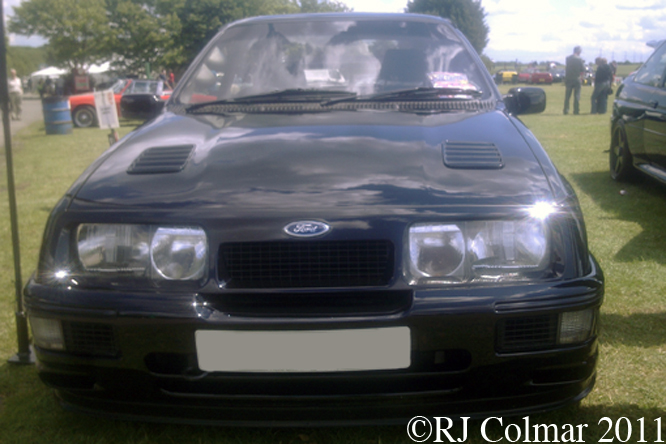
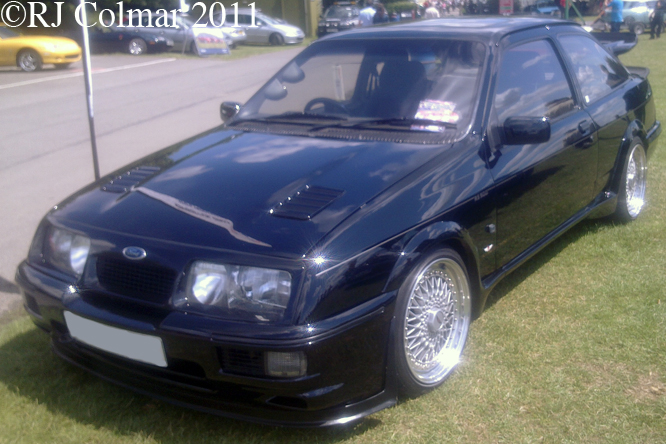
On the 22nd September 1982 Ford of Britain launched it’s replacement for the much loved conservative Ford Cortina to an unsuspecting public. Project Toni, designed by Uwe Bahnsen, Robert Lutz and Patrick le Quément, was unveiled as the Ford Sierra to a fair amount of public myrth and ridicule in the absence of much acclaim except in Ireland where the Sierra won the 1983 Semperit Irish Car of the Year award.

Ford Sierra RS Cosworth, Fishguard, Wales

While there was nothing fundamentally wrong with the mechanical operation of the car much of which was inherited from the final incarnation of the Ford Cortina Mk 5, the styling, which was similar to the well received US Ford Probe, had been pushed a bit too far in the quest for aerodynamic efficiency leading to nick names for the Sierra like ‘the blob’ and ‘Salesmans Spaceship’.

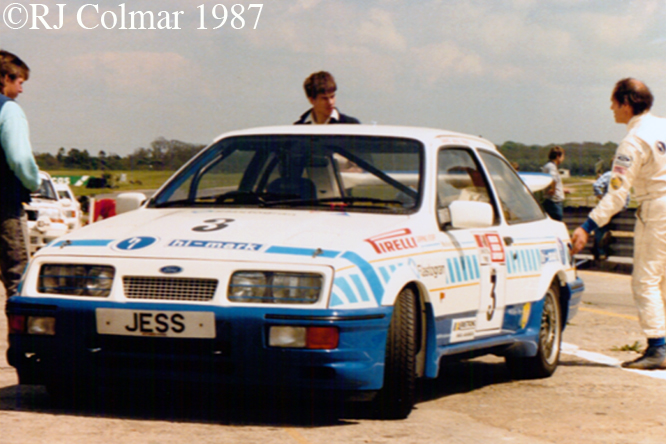
Ford Sierra RS Cosworth, Snetterton

Fortunately it was the salesmans fleet market which saved the model from sinking faster than the Edsel. The #3 above was an early leader in the 1987 Willhire 24 Hour race at Snetterton driven by Graham Scarbrough and David ‘Jess’ Yates who is standing with his back to the camera on the right.

Ford Sierra RS Cosworth, Brands Hatch

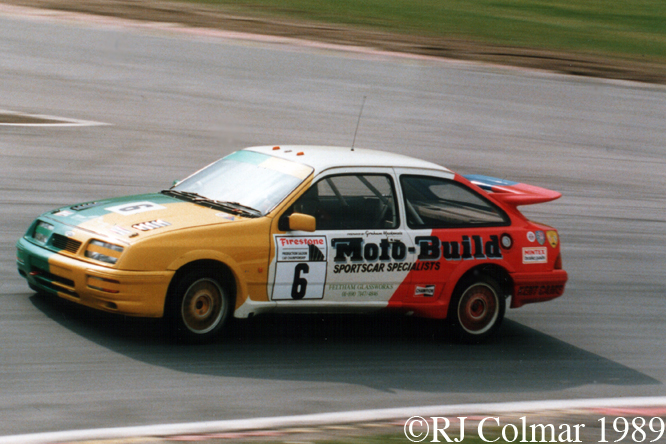
In the spring of 1983 Stuart Turner head of Ford Motorsport Europe devised a plan to put Ford at the top of the new Group A saloon car championships which were run nationally and internationally in Europe. Above the #6 is driven by Graham Davis at Brands Hatch.

Ford Sierra RS Cosworth, Donington

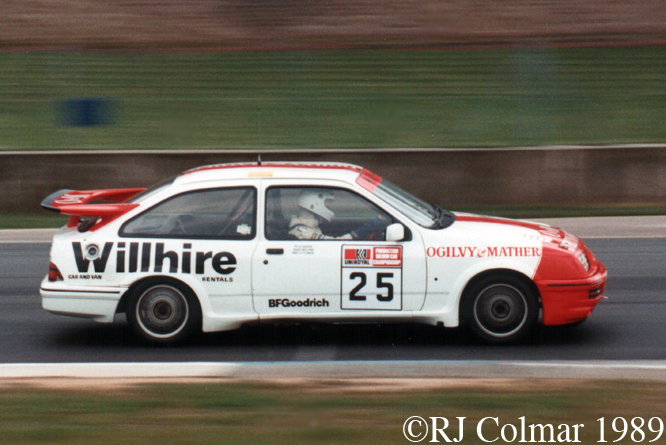
In the spring of 1983 Stuart Turner head of Ford Motorsport Europe devised a plan to put Ford at the top of the new Group A saloon car championships which were run nationally and internationally in Europe. Above the #24 is driven by Peter Sugden at Donington and shared with Roger ‘Willhire’ Williams in the 1989 Willhire 25 hours at Snetterton.

Ford Sierra RS Cosworth, Brands Hatch

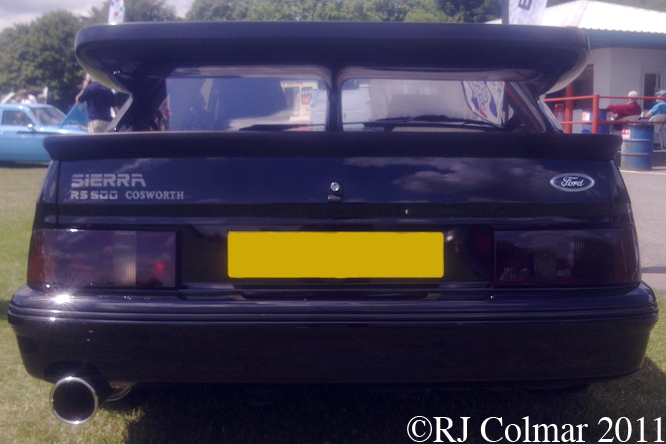
Lessons learned from Roush Racing in the USA and Andy Rouse in Britain with XR4Ti racing programmes were incorporated into the suspension while a reworked Sierra 3 door body designed by Lother Pinske was developed which featured a distinctive ‘tea tray’ rear wing deemed necessary to keep the rear wheels on the ground at speeds in excess of 186 mph.

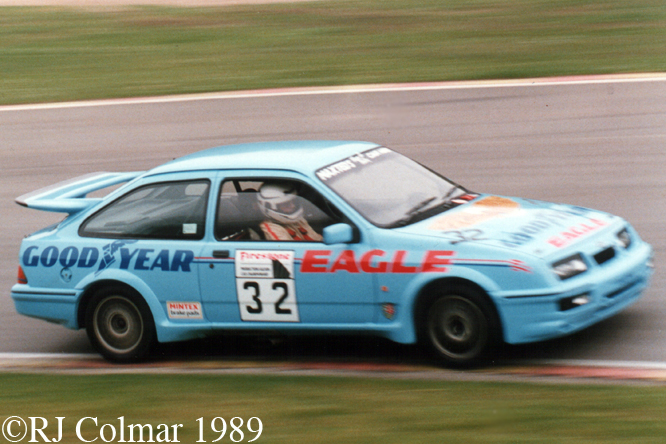
5045 Ford Sierra Cosworths were manufactured in 1986, enough to qualify for International Group A and national Group N racing, in only three colours, all with a grey interior and with the only options being central locking and or electric windows. The racers seen here were all prepared to the lower state of tune Group N spec for the national Uniroyal and Firestone production car championships.

Keith Maxted is thought to be the driver of the #32 Goodyear Sierra RS Cosworth seen at Brands Hatch on April 23rd 1989, if you know different please chime in below.

My thanks to Alan Cox & Gregor Marshall at The Nostalgia Forum for their help identifying the drivers of the four racers.

Thanks for joining me on this ‘Turbo Toni’ edition of ‘Gettin’ a li’l psycho on tyres’, I hope you will join me again tomorrow. Don’t forget to come back now !
Share

Annus Horribilis – Ferrari 312 T5 #044 & #045

After winning the 1979 World Championship with the cobbled to together Ferrari T4 I looked at last week Ferrari made a decision to change direction, in view of the fact that the recently discovered ground effects which manipulated air passing under the car to create aerodynamic down force with little cost in favored vehicles with narrow motors. During the 1979 season Ferrari had run with the 180 degree V12 the widest motor in the field and were also running the only transverse gearbox which further compromised the aerodynamics.

Ferrari T5, Brands Hatch

Ferrari took the decision to build a V6 turbocharged motor but it would not be ready until the 1981 season so in the interim they scaled down the bodywork of the Ferrari T5 in order to try and improve straight line speed which had been lacking in the T4 and also made a narrower version of the 180 degree V12 which had dire consequences on hitherto rock solid reliability. Jody Scheckter, who by his own admission had already achieved his goal in 1979 and decided to retire at the end of 1980 had a simply dire year trying to defend his championship scoring just two points in Long Beach and failing to even qualify for his last but one Grand Prix in Canada completely.

Ferrari T5, Brands Hatch

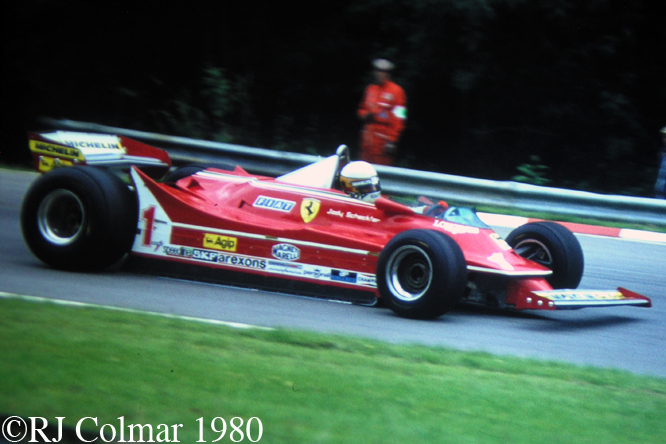
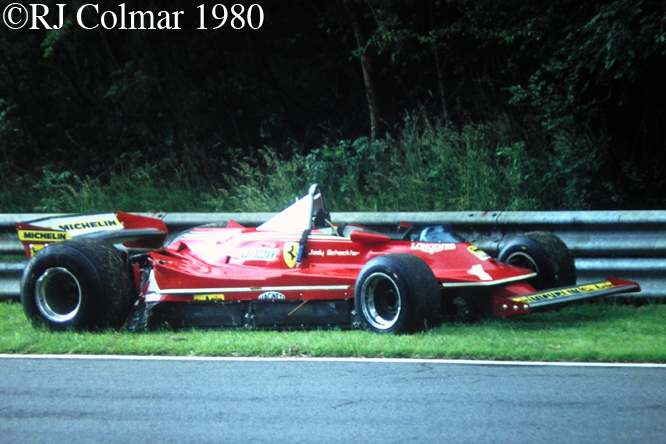
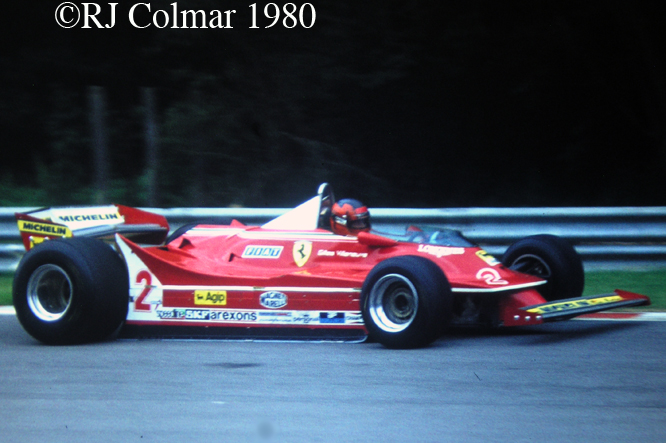
The #1 seen in both photo’s above during practice for the 1980 British Grand Prix is chassis #044 which was mostly taken to races as a spare car in the 1980 season both Jody Scheckter and Gilles Villeneuve raced the car with Gilles scoring the chassis best finish a 5th place in Canada.

Ferrari T5, Brands Hatch

Gilles Villeneuve managed to score a total of six points in 1980, the eight points total scored by Ferrari equaled a tenth place finish in the Championship, an all time low scoring only on point more in 14 races than in the 11 race in 1969 season when they finished 6th in the championship. The chassis above is #045 in which Gilles scored a best 5th place in Monaco and a further 6th place in Belgium. At the 1980 Canadian GP Gilles Villeneuve took the first attempt to start in #045 above but was involved in a first corner meleé which eliminated seven cars from the race. He then jumped in to chassis #044, which Jody crashed at during practice for the British Grand Prix, see middle photo and came home 5th.

Thanks for joining me on the ‘Annus Horribilis’ edition of ‘Gettin’ a li’l psycho on tyres’, I hope you will join me again tomorrow. Don’t forget to come back now !
Share