Tag Archives: Dodge

Third Generation Friend – Dodge Dakota R/T

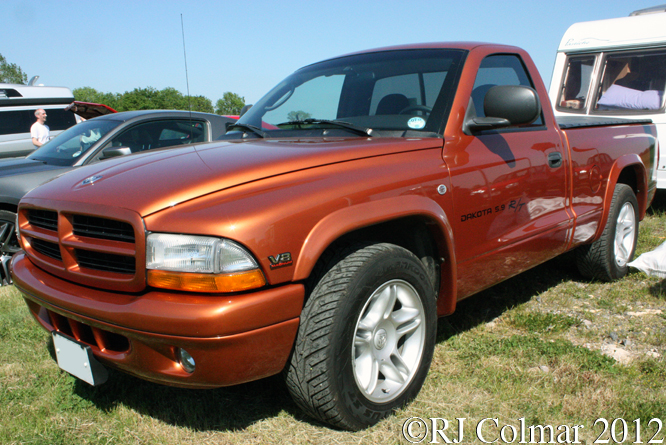
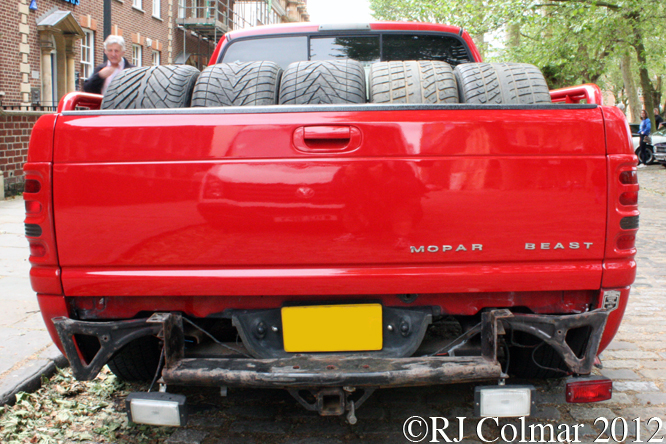
The original Dodge Dakota (Sioux for friend) was a mid size pickup truck, less than half ton, launched in 1987, an upgraded second generation was launched in 1991.

Dodge Dakota R/T, Yanks Picnic, Shakespeare, County, Raceway,

The third generation Dakota’s were launched in in 1997 drawing heavily on the big rig look of the full size Dodge Ram styling first seen in 1994.

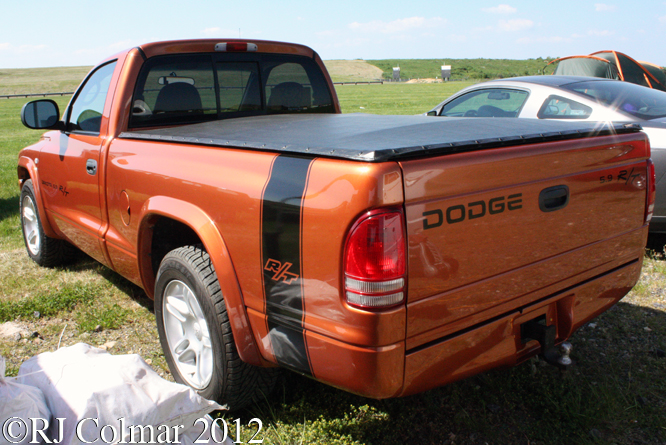
Dodge Dakota R/T, Yanks Picnic, Shakespeare, County, Raceway,

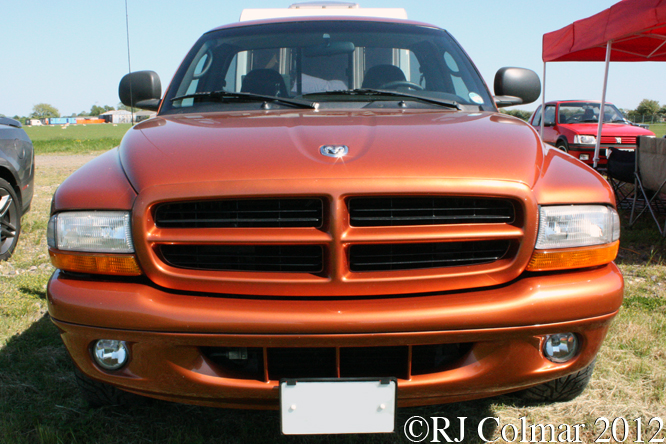
In 1998 a sports orientated R/T version of the Dakota was announced with a 250hp 5.9 litre / 360 cui Magnum V8 which was coupled with a heavy duty 46RE 4 speed automatic transmission. Additional R/T goodies included performance axle, cast aluminum wheels, limited slip differential, sport suspension and steering, uprated brakes, performance exhaust, monotone paint and bucket seats in the cab.

Dodge Dakota R/T, Yanks Picnic, Shakespeare, County, Raceway,

In 2000, the year the vehicle seen here at Shakespeare County Raceway was built, the Dodge Dakota was nominated for the North American Truck of the Year award coming in second. The 4th generation Ram Dakota was launched in 2009 and the model was subsequently completely discontinued in 2011.

Thanks for joining me on this “Third Generation Friend” edition of “Gettin’ a li’l psycho on tyres” I hope you will join me again tomorrow. Don’t forget to come back now !

Share

Big Rig Look – Dodge Ram 1500 Extended Cab

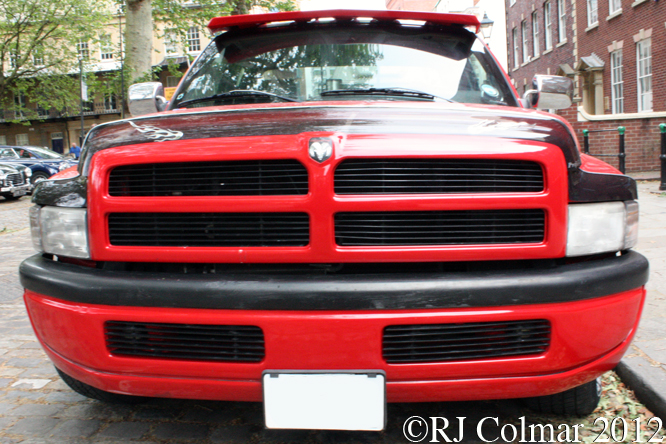
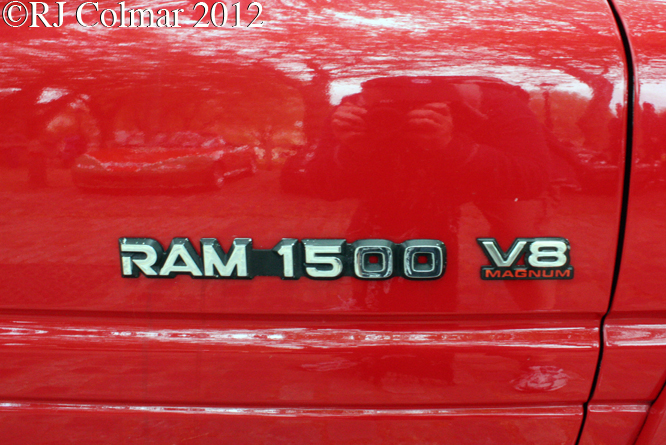
After extensive customer research chief designer Philip E Payne took a gamble and went with the big rig look for the second generation (BR) Dodge Rams launched in 1994. He knew that by pandering to the majority of his clients he might loose a few of those who preferred softer styling.

Dodge Ram 1500 Extended Cab, Avenue Drivers Club, Queen Square, Bristol

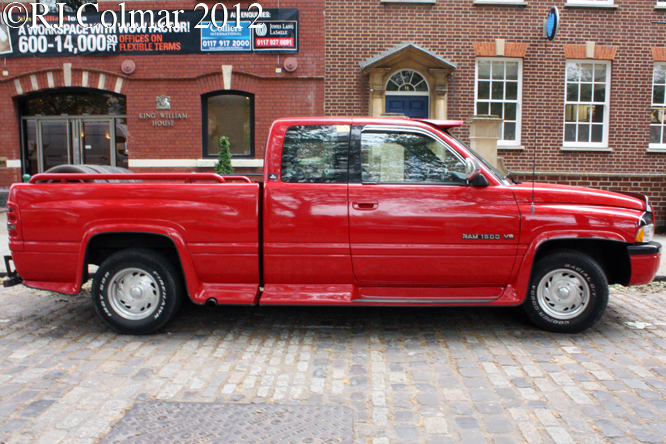
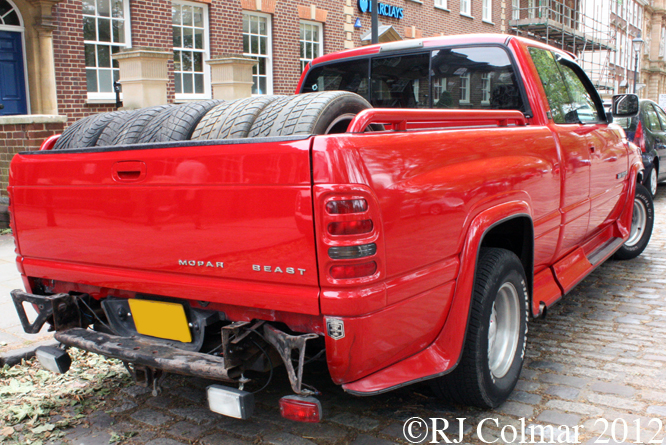
The Big Rig look gave the new range of Dodge Ram’s instant recognition that was quite distinctive form the main rivals built by General Motors and Ford, and the look is even more distinctive on this ’95 1500 extended cab with the bug deflectors and sun shield, the only thing missing are the christmas tree lights usually found on big rigs.

Dodge Ram 1500 Extended Cab, Avenue Drivers Club, Queen Square, Bristol

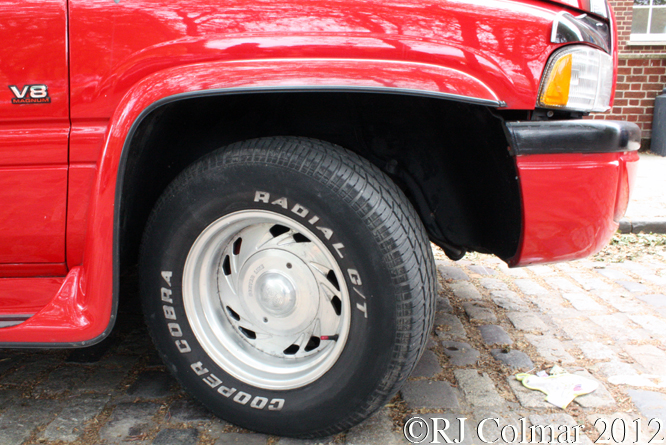
The second generation Dodge Rams were powered by the same motors as the first series this one, seen at last year’s Avenue Drivers Club meeting in June, is powered by a top of the 1500 range 230 hp 5.9 litre / 360 cui Magnum V8.

Dodge Ram 1500 Extended Cab, Avenue Drivers Club, Queen Square, Bristol

Second Generation Rams were available in 1500 half ton, 2500 3/4 ton and 3500 dually one ton forms. The 2500 3/4 ton and 3500 one ton was available with a 8 litre / 488 cui V10 that was used as the basis for the Dodge Viper sports cars.

Dodge Ram 1500 Extended Cab, Avenue Drivers Club, Queen Square, Bristol

Ram body options included 2 door, 2 door extended cab and from 1998 Quad Cab 4 door extended cab with front opening “suicide’ doors. Special attention was given to the storage area’s inside the cab with a large glovebox, central armrest storage and further storage space behind the seats.

Dodge Ram 1500 Extended Cab, Avenue Drivers Club, Queen Square, Bristol

1500 Rams could be ordered with either 6′ or 8′ beds. THis truck will have been fitted with an A518 four speed automatic transmission a descendant of the TorqueFlight 3 speed automatic transmission first seen in 1956.

Dodge Ram 1500 Extended Cab, Avenue Drivers Club, Queen Square, Bristol

The 1996 film Twister featured a similar 3/4 ton Ram 2500 with club cab on the back to the one seen here, sadly it was destroyed near the end of the story nearly bringing some pick up truck fans to tears.

Dodge Ram 1500 Extended Cab, Avenue Drivers Club, Queen Square, Bristol

Philip E Payne’s gamble with the big rig look paid off handsomely as Dodge went from it’s traditional third spot in truck sales behind Ford and General Motors to first in three years and stayed at the top from 1996 to 1999 by which time both Ford and GM had caught up with the big rig look.

Thanks for joining me on this “Big Rig Look” edition of “Gettin’ a li’l psycho on tyres” I hope you will join me again tomorrow. Don’t forget to come back now !

Share

Job Related – Dodge 1 Ton Pickup

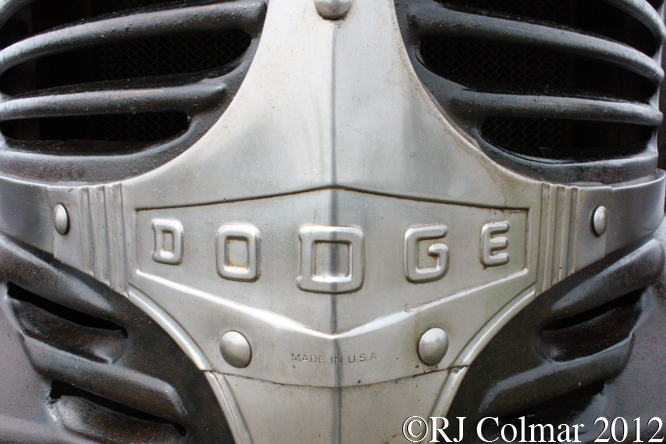
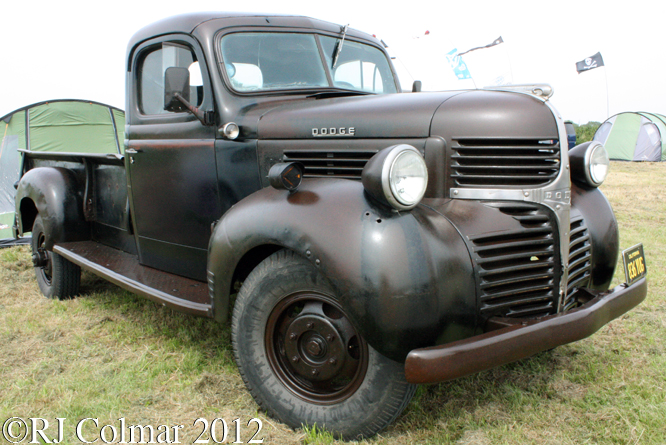
In 1939 Dodge launched it “Job Related” series of trucks and panel vans that would stay in production until 1947.

Dodge 1 Ton Pickup, Summer Classics, Easter Compton

The Job Related series can be recognised by it’s streamline styling which was becoming all the rage in 1939.

Dodge 1 Ton Pickup, Summer Classics, Easter Compton

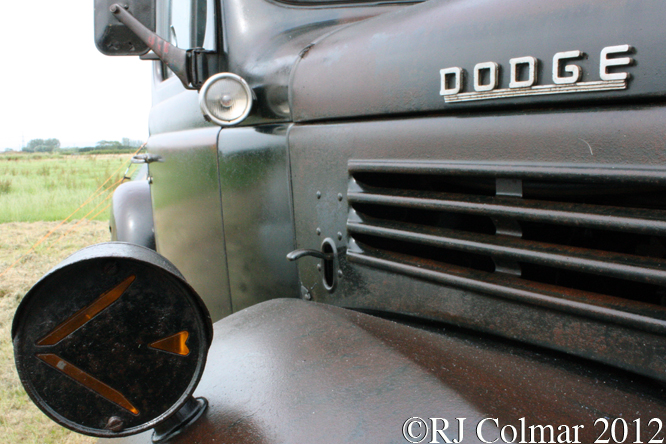
In 1941 parking lights mounted on the cowling became a standard feature on all subsequent “Job Related” vehicles.

Dodge 1 Ton Pickup, Summer Classics, Easter Compton

From what I have observed front indicator lights appear to have been entirely optional even as late as 1947 when this particular truck was built, presumably other road users were expected to see the drivers hand signal’s to predict where the truck was going.

Dodge 1 Ton Pickup, Summer Classics, Easter Compton

The motor for this truck, seen at last years Summer Classics in Easter Compton, is officially quoted as 3772 cc / 230 cui which would have given 105 hp and was unique to the 1 ton trucks from 1942 on.

Dodge 1 Ton Pickup, Summer Classics, Easter Compton

The gauges from left to right are water temperature, oil temperature (hidden by the 1/4 light window, speed and odometer, fuel tank and battery charge, a better selection than can be found on some cheap motor cars today. Radio was by drivers built in i-player only.

Dodge 1 Ton Pickup, Summer Classics, Easter Compton

The Dodge 1 ton pick up sits on a 120″ chassis with a 7 1/2 foot cargo box, from 1939 to 1985 all Dodge pickup cargo boxes came with a wooden floor, painted black, with steel skid strips.

Thanks for joining me on this “Job Related” edition of “Gettin’ a li’l psycho on tyres” I hope you will join me again tomorrow. Don’t forget to come back now !

Share

Perfect Car For A Wedding #7 – Dodge Challenger SRT/8

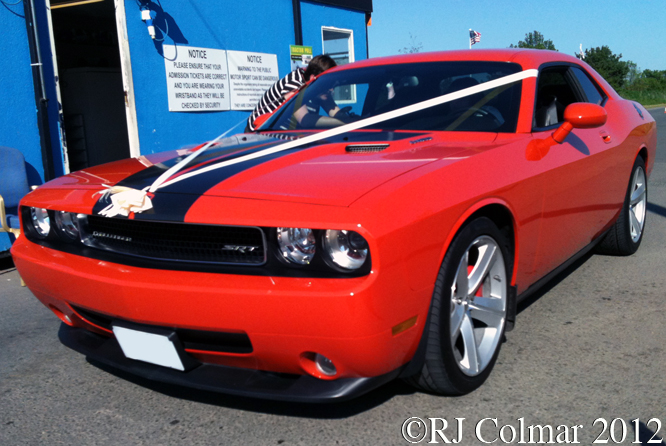
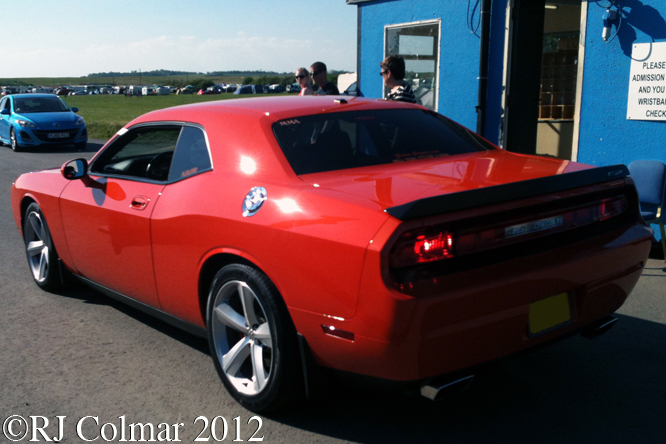
It’s been a while since I have run a “Perfect Car For A Wedding” feature and of those I have run today’s third generation 2008 Dodge Challenger SRT/8 is easily my favorite.

While Ford has always been the trend setter in the pony car market segment, Dodge, who were third in first time round with the 1970 Challenger, beat Chevrolet to 2nd place by a full year at the end of the Naughties after the pony car market segmented was started the second time round by Ford in 2005.

Dodge Challenger SRT 8, Shakespeare County Raceway

The Dodge Challenger SRT/8 was launched at the Chicago and Philadelphia International Auto Show’s simultaneously in February 2008. Unusually all 6400 first production run STR8s were pre sold.

All US market 2008 Challengers like the one seen here were SRT/8 models fitted with 425 hp 6.1 litre / 370 cui HEMI V8s and a five speed AutoStick automatic transmission.

Dodge Challenger SRT 8, Shakespeare County Raceway

The SRT/8 is built on an shortened Chrysler LX platform known as the LC, and shares front and rear suspension components with the Mercedes Benz W220 S Class and W120 E Class respectively.

In 2008 Chrysler Canada built a separate run of between 670 and 719 Challenger 500’s for the Canadian market only.

The Challenger is seen here at the entrance of Shakespeare County Raceway after the owner had used it at her friends wedding earlier in the afternoon. Wishing everybody about to get married today all the best and many happy years together.

Thanks for joining me on this “Perfect Car For A Wedding #7 ” edition of “Gettin’ a li’l psycho on tyres” I hope you will join me again tomorrow. Don’t for get to come back now !

Share

Tomorrow Or The End Of Time – Dodge Challenger R/T 440 Magnum

The first piece of music to make the hair on the back of my neck stand on end was by James Marshall Hendrix, some time in 1967 I was home alone during the day time so it was probably during the Easter holidays, I was messing about with some extremely uncomfortable ex military bakerlite head phones when the announcer on the radio told us that coming next would be Jimi Hendrix latest hit “Purple Haze”. I unplugged and took off the headphones and turned up the volume control of the radiogram a little in anticipation of something interesting happening.
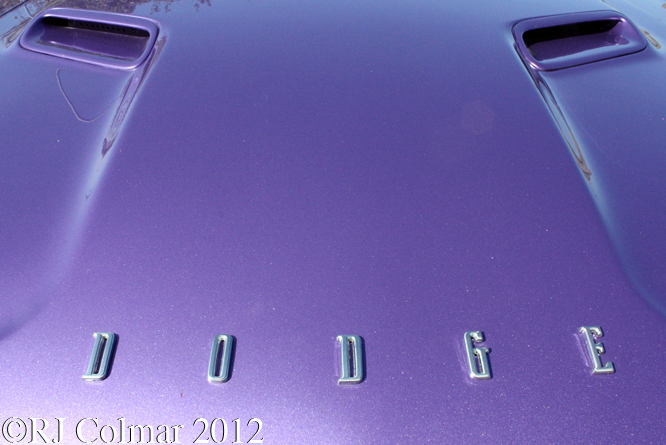
Dodge Challenger R/T 440 Magnum, Yanks and Gary’s 34th Picnic, Shakespeare County Raceway

By the time the opening riff blurted out I reached out and did something I had never done before, I maxed out the volume ! By the end of the song I was certainly tuned in and turned on to the Jimi Hendrix Experience even though I had no idea what it was, except it felt really good and I had a new found love for the colour purple and a curiosity for the line “Is this tomorrow or just the end of time ?”
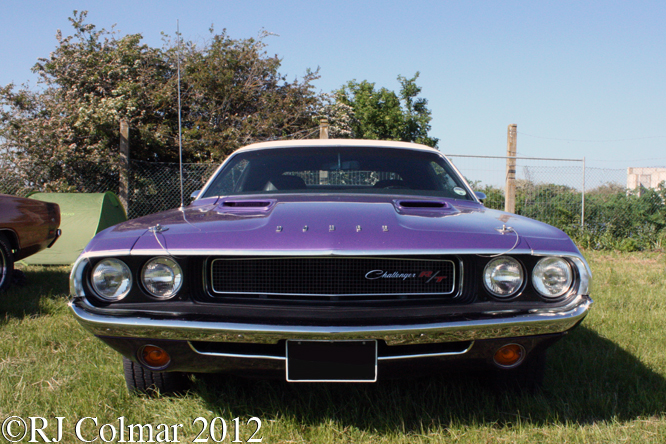
Dodge Challenger R/T 440 Magnum, Yanks and Gary’s 34th Picnic, Shakespeare County Raceway

This Tomorrow Or The End Of Time theme is revisited in the 1971 flash back road movie “Vanishing Point” which begins with an all American anti hero Kowolski driving a white 1970 Dodge Challenger R/T 440 Magnum pulling back from a 90 mph impact with a couple of Catepillar bulldozers, that serve as a makeshift police roadblock and vanishing into thin air, before retelling the story of how Kowolski got to the point of staring tomorrow or the end of time in the face.
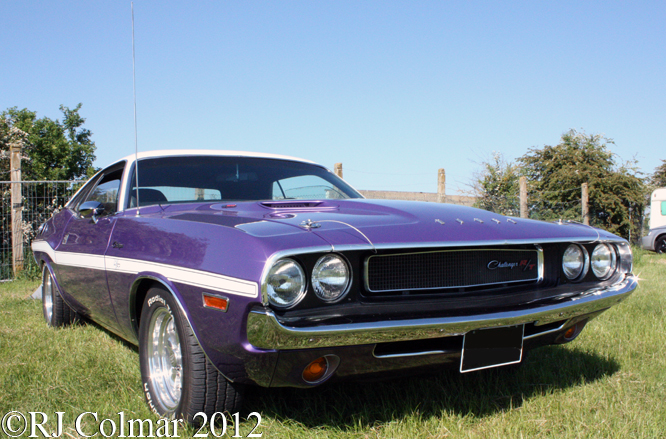
Dodge Challenger R/T 440 Magnum, Yanks and Gary’s 34th Picnic, Shakespeare County Raceway

While reading up on the history of the Challenger I was interested to learn that the very first Challenger was actually a limited edition two door body called the Dodge Silver Challenger that was only available in in silver and came fully loaded with premium white wall tyres, full wheel covers, electric windscreen wipers, luxury fabric interior and deep pile carpets through out.
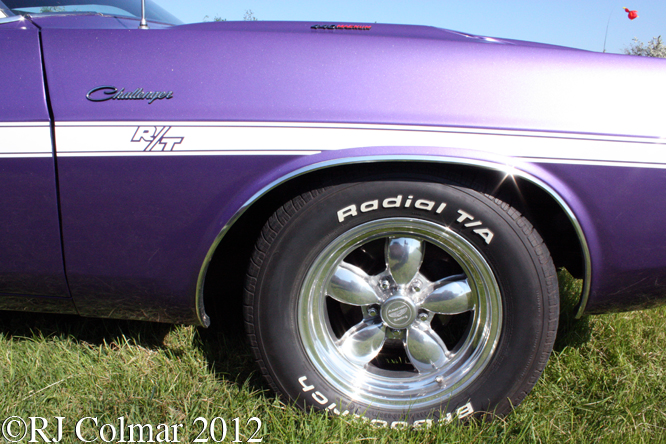
Dodge Challenger R/T 440 Magnum, Yanks and Gary’s 34th Picnic, Shakespeare County Raceway

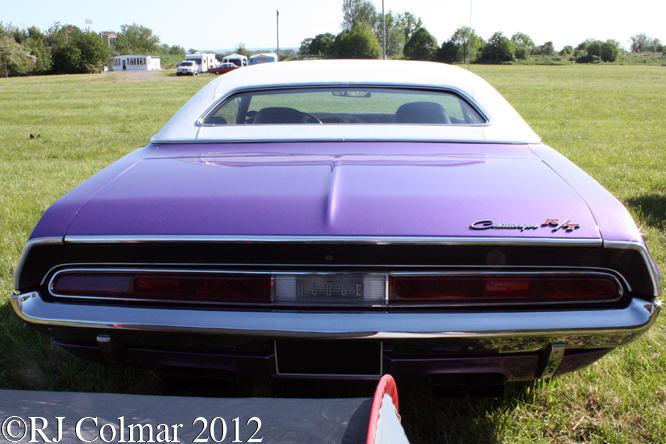
For 1970 Carl Cameron came up with the exterior design for the second generation Challenger, like the Plum Crazy FC-7 1970 example seen here at Shakespeare County Raceway earlier this year. Chrysler had determined that the similar but shorter Plymouth Barracuda should belatedly compete with the Mustang and Camaro and the Dodge Challenger should compete with the Mercury Cougar and Pontiac Firebird in the pony car market.
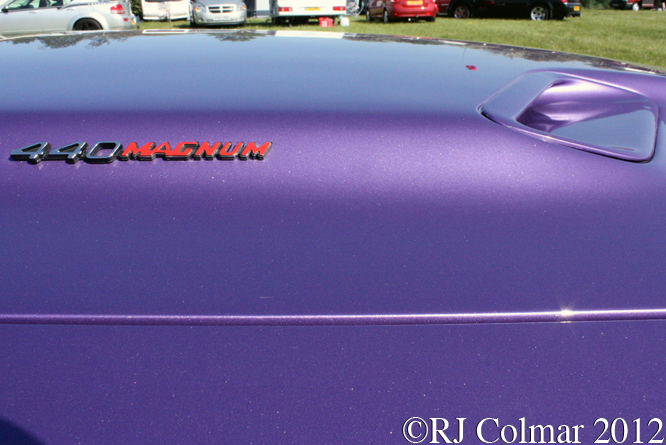
Dodge Challenger R/T 440 Magnum, Yanks and Gary’s 34th Picnic, Shakespeare County Raceway

Of the engine options available to Challenger customers there were two 440 cui / 7.2 litre Magnum options one 375 hp with a single four barrel carburetor and one 395 hp with three x two barrel carburetors known as the six pack. The car seen here appears to be the 375 hp option as distinguished by the air scoop which on the more powerful six pack models sits on top of the carburetor intakes in the center of the bonnet hood.
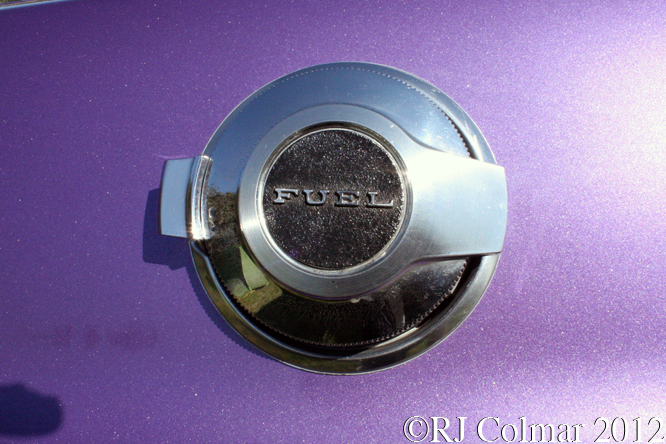
Dodge Challenger R/T 440 Magnum, Yanks and Gary’s 34th Picnic, Shakespeare County Raceway

Because of low sales volumes of the larger engine Challengers they have become extremely collectable, especially if the engine and chassis numbers match the original factory records. Within the pony car segment this late arrival did well to sell 76,935 copies in 1970 after which sales plummeted to less than 30,000 a year until the model was discontinued in 1974.
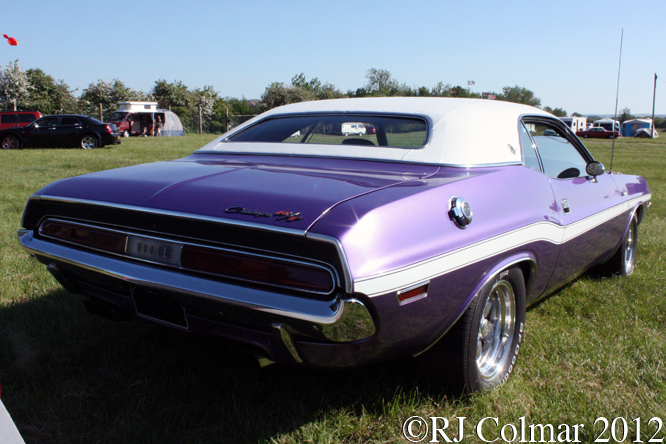
Dodge Challenger R/T 440 Magnum, Yanks and Gary’s 34th Picnic, Shakespeare County Raceway

Attractive though the Mustangs and Camaros are for my money the Challenger is the most desirable of all the muscle pony cars, there is something about it’s lines that are simply a little less fussy, a little smoother and more refined that look a bit further forward than all the others seen on pony cars in my humble opinion.
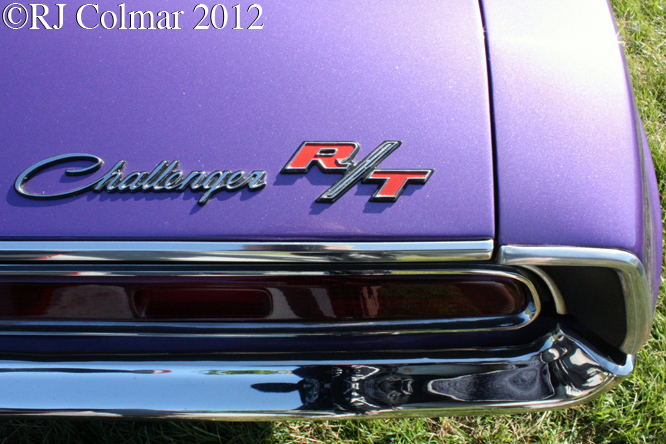
Dodge Challenger R/T 440 Magnum, Yanks and Gary’s 34th Picnic, Shakespeare County Raceway

The Challenger R/T with the 440 Magnum as seen here and in the original 1971 version of Vanishing point was capable of covering a quarter mile in 13.8 seconds by which time it would be touching 102 mph, the 440 Magnum was only listed for the 1970 model year though it was available as a special order in 1971.
Dodge Challenger R/T 440 Magnum, Yanks and Gary’s 34th Picnic, Shakespeare County Raceway

When Kowolski approached the point of no return at the end of Vanishing Point he had a choice to turn back and see what the tomorrow would bring or to keep going further and faster into oblivion, giving up the struggle of life, forgetting not to let a few bad moments spoil a bunch of good ones and disappear into the end of time. I guess if you don’t know what happened next you’ll just have to see the film for your self to find out.

Thanks for joining me on this “Tomorrow Or The End Of Time” edition of “Gettin’ a li’l psycho on tyres” I hope you’ll join me for Ferrari Friday tomorrow. Don’t forget to come back now.
Share

From the Good Guys In White Hats – Dodge Charger

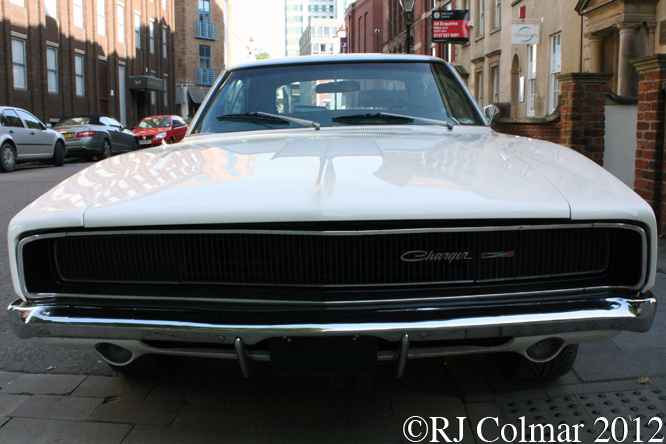
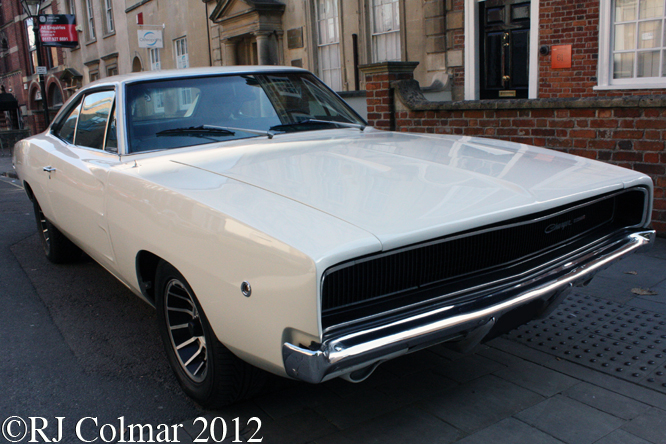
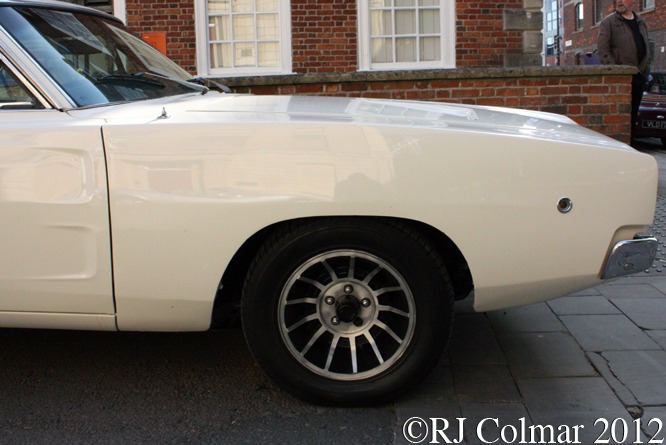
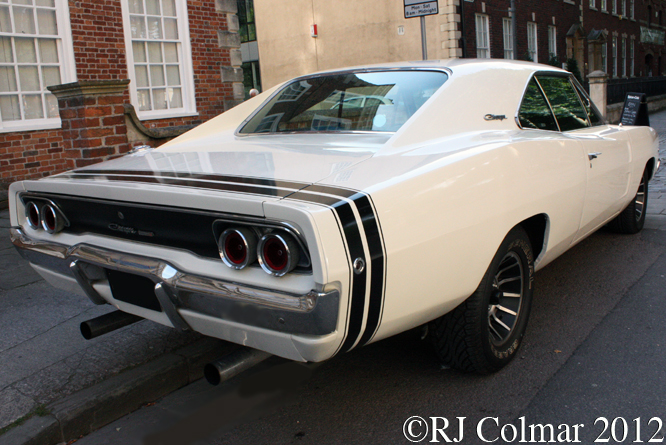
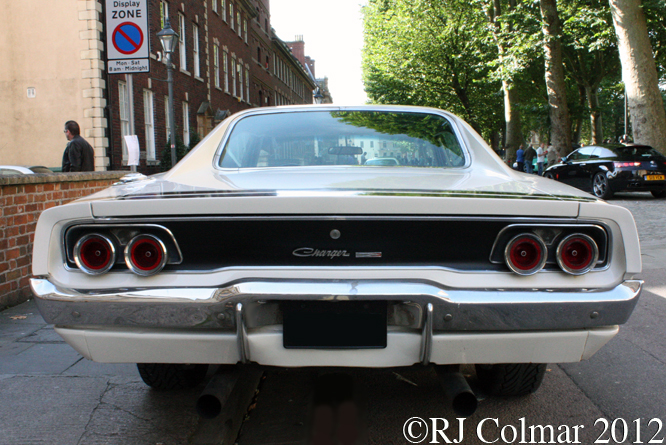
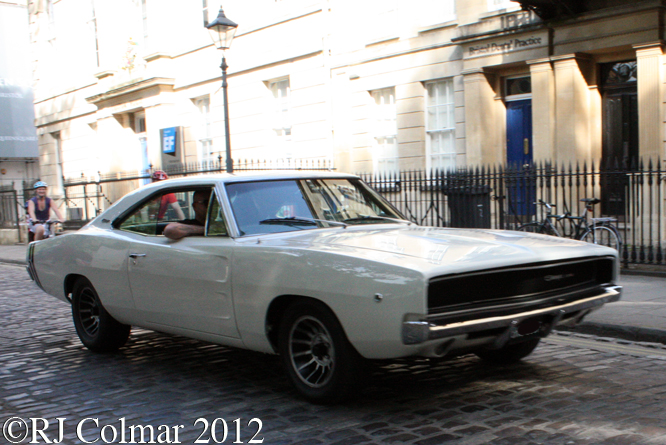
The second generation Dodge Charger was launched in 1968 with a commercial cartoon urging customers to visit “those great Dodge boys they’re the good guys in white hats.”

Dodge Charger, Avenue Drivers Club, Bristol

The new body was designed by a team that included Richard Sias who was responsible for the overall profile.

Dodge Charger, Avenue Drivers Club, Bristol

Engine options included a standard 5.2 litre / 318 cui V8 a 3.7 litre / 225 cui straight six, a 7 litre / 426 cui Hemi or a 7.2 litre / 440 cui Magnum was available for the top of the range R/T versions. This particular car appears to be powered by a 6.3 litre V8 which was available with either 290 hp 2 barrel carburetor or 330 hp 4 barrel carburetor variations.

Dodge Charger, Avenue Drivers Club, Bristol

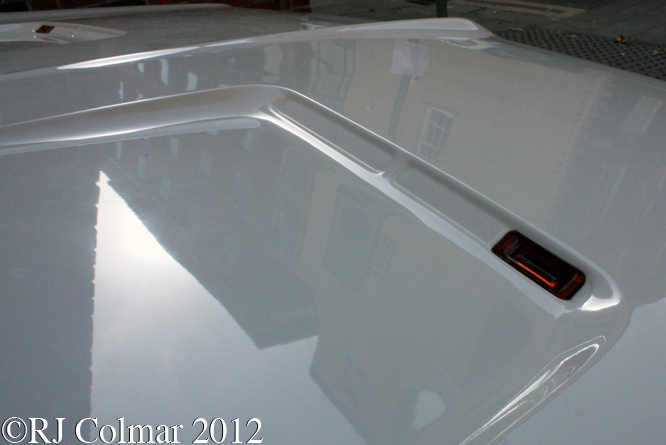
The dual scallops on the bonnet / hood

Dodge Charger, Avenue Drivers Club, Bristol

and front doors added to the performance “Lets stir things up a bit” appearance of the car despite there complete non mechanical or aerodynamic functionality.

Dodge Charger, Avenue Drivers Club, Bristol

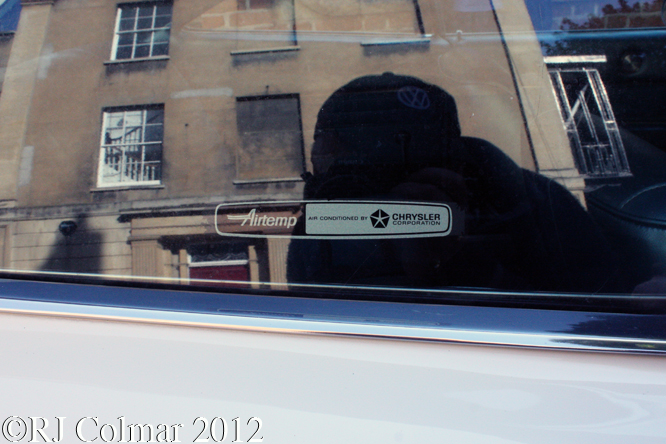
Among the options for the Charger was air conditioning, cruise control, electric door locks, tachometer, rear window demister, and a wood-grain steering wheel.

Dodge Charger, Avenue Drivers Club, Bristol

Safety options included head restraints for the front seats, lap belts for center seat passengers, shoulder belts front and rear and a padded steering wheel.

Dodge Charger, Avenue Drivers Club, Bristol

The integrated rear spoiler mimicking aerodynamic devices seen on Can Am and sports car racers of the period further enhanced the competition bred appearance of the Charger, the paired round rear lights were added at the suggestion of Styling Vice President, Elwood P. Engel.

Dodge Charger, Avenue Drivers Club, Bristol

Around 96,100 Chargers were built in the 1968 model year, 75% of which were fitted with factory option Vinyl roofs. 17,000 top of the range R/T Chargers were built of which just 500 were fitted with the fabled 426 Hemi.

Dodge Charger, Avenue Drivers Club, Bristol

The ’68 Charger, which share the same platform with the Dodge Coronet, is probably most famous for it’s movie appearance in Bullitt, which features a couple of hit men in a black Charger R/T dualing for tarmac with Steve McQueen driving his green Mustang GT. By all accounts the R/T was the superior machine.

Thanks for joining me on this “From the Good Guys In White Hats” edition of “Gettin’ a li’l psycho on tyres”, I hope you’ll join me again for Ferrari Friday tomorrow. Don’t forget to come back now !

Share

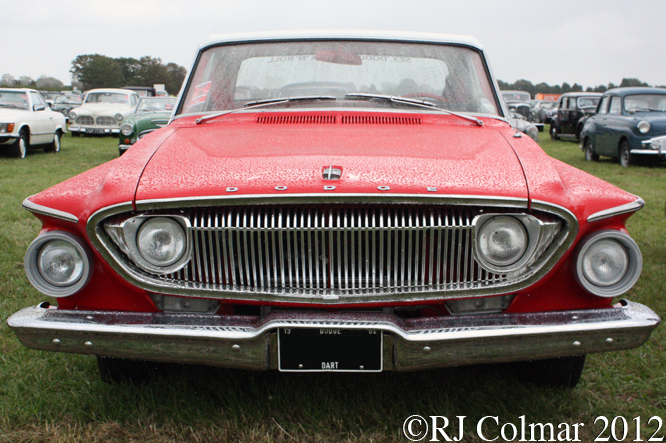
Action Economy Lean Breed – Dodge Dart

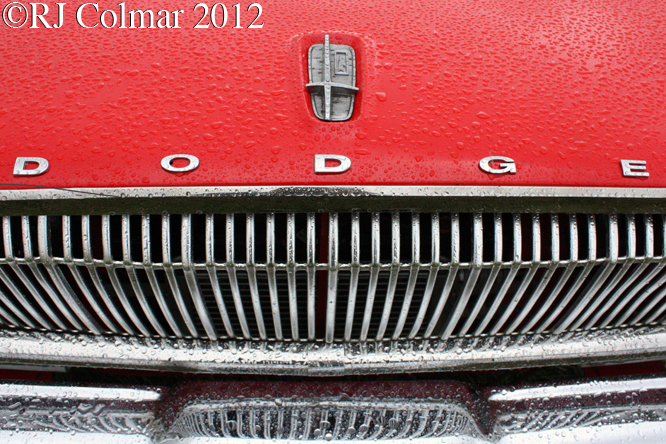
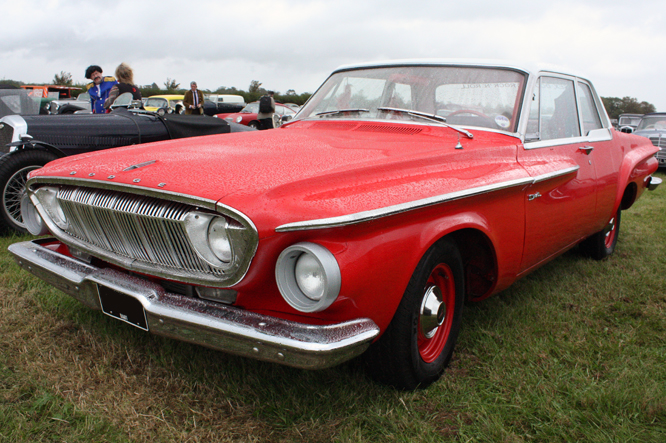
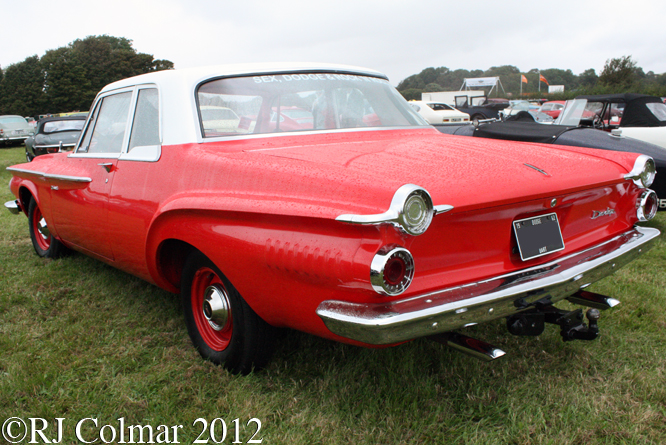
I have always thought the 1962 Dodge Dart looked like an amalgamation of two separate designs the middle top half and

Dodge Dart, Goodwood Revival

lower outer half not quite matching but somehow blending at the broken chrome line on the front and rear wings.

Dodge Dart, Goodwood Revival

The design philosophy behind the Dart was based on a comedic misinterpretation by Chrysler executives of an over heard conversation between Chevrolet executives who were talking about the compact Chevrolet Nova, but which Chrysler executives thought was about downsized large cars like the Impala. As a result of this misunderstanding the second generation Dart became an intermediate and inadvertently left Dodge with nothing to compete with in the full size market segment at the start of the 1962 model year.

Dodge Dart, Goodwood Revival

Launched in 1962 with strap lines that included “First of the action economy cars” and “Come in and drive the new lean breed of Dodge” the range included 2 and four door Sedan and Hardtop models along with a two door convertible.

Dodge Dart, Goodwood Revival

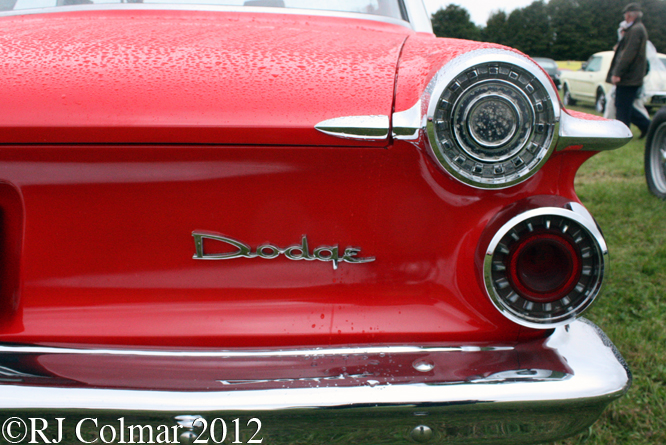
The B platform unibody rode on “Torsion-Aire” torsion bar front suspension and could be ordered with motors ranging from a 3.7 litre / 225 cui inclined straight six to a 6.8 litre / 213 cui V8, the car featured here appears to be registered as having a 7.2 litre / 439 cui motor, a big block 440 Magnum dating from somewhere between 1966 and 1978.

Dodge Dart, Goodwood Revival

With it’s light weight and good handling the ’62 Dart fitted with the 415hp 6.8 litre / 413 cui “Ramcharger” V8 proved a popular record braking drag racer.

Dodge Dart, Goodwood Revival

The B platform remained in production with slight modifications until 1981 while the ’62 Dart body was wholly replaced with no carry over at all by the third generation Dart in 1963.

Thanks for joining me on this “Action Economy Lean Breed” edition of “Gettin’ a li’l psycho on tyres” I hope you will join me again tomorrow for Ferrari Friday. Don’t forget to come back now !

Share