Tag Archives: 500

The Little Car Show 2014 – City of Marina

Today’s post starts with an apology, a couple of years ago I posted a blog called “Continental Curiosities – Carmel By The Sea Concour’s d’Elegance” turns out it should have been called “Continental Curiosities – The Little Car Show City of Marina” or something similar and a little more snappy, I hope you will accept my unreserved apologies for any confusion.
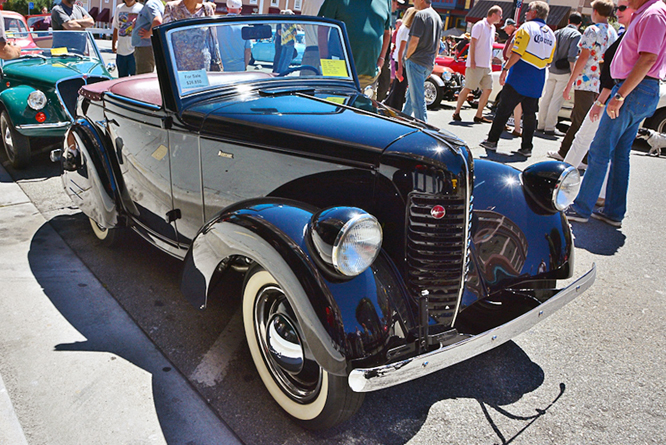
Bantam Convertible Coupé, The Little Car Show, City Of Marina

Today’s post comes courtesy of Geoffrey Horton who kindly forwarded these photographs comes from the 2014 edition of The Little Car Show held last month in the City of Marina. Above a 1940 American Bantam Convertible Coupé also known as the Hollywood a body style apparently penned by Elanor Powell’s Custom Motors stylist Alex Tremulis.
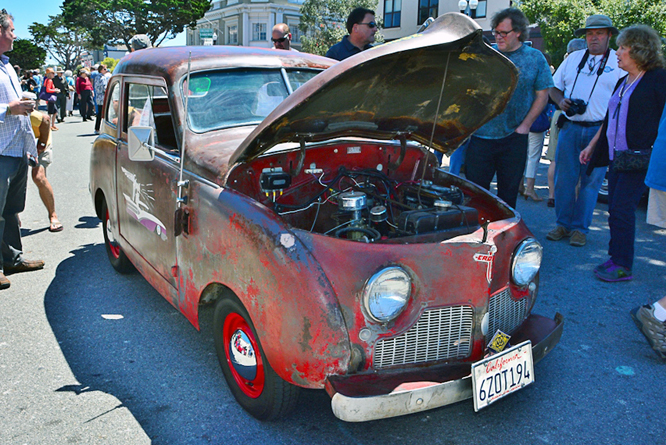
Crosley 2 door Sedan, The Little Car Show, City Of Marina

Not sure of the exact age of this Crosley but the absence of chrome suggests it was built in 1946/7 with the original not terribly reliable copper brazed ‘CoBra’ 4 cylinder motor that was to be replaced by the Cast Iron Block Assenbley ‘CIBA’ in 1949.
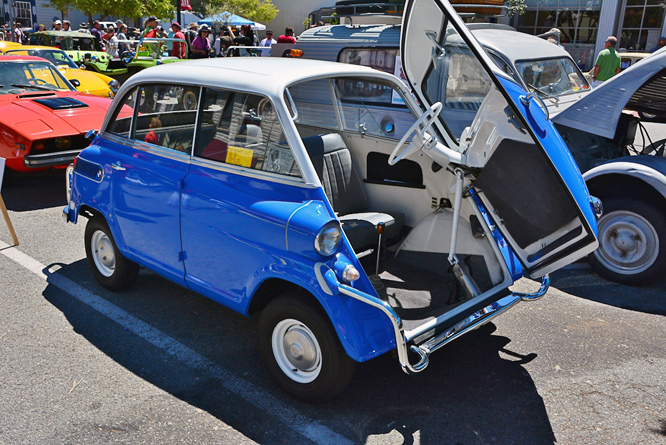
BMW Isetta 600, The Little Car Show, City Of Marina

The Isetta was the ultimate version of the BMW 250 Isetta three wheel bubble car built under licence from Iso Rivolta. This 1958 example is powered by a two cylinder BMW motorcycle engine and can accommodate four passengers who enter through it’s single front door.
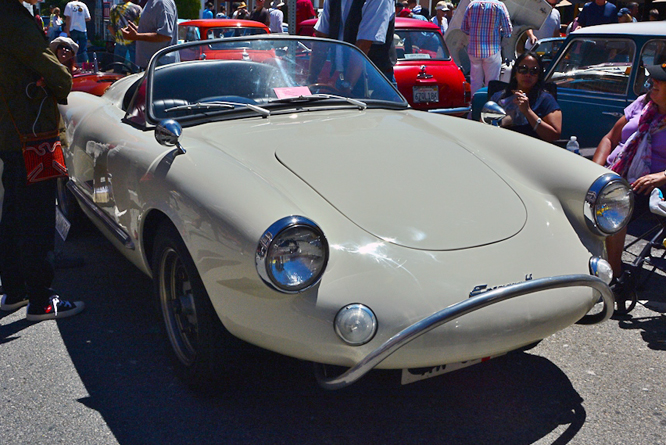
Enzmann 506, The Little Car Show, City Of Marina

I had not heard of Enzmann before Geoffrey sent me the photograph of the fibre glass bodied 506 model above. The Swiss company named it’s first, only (?) model, based on the floor pan and running gear of a VW Beetle, after the number of the stand it was allocated at the 1957 Frankfurt Motor Show at which the company made it’s first public appearance.
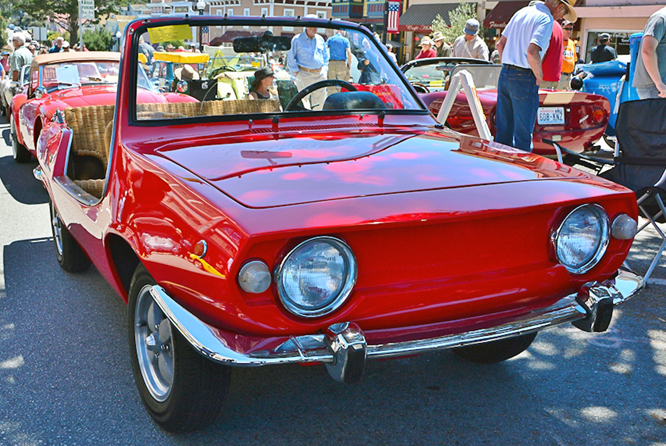
Michelotti Shellette, The Little Car Show, City Of Marina

For those with a private island or private yacht in the Mediterranean in need of occasional transport designer Giovanni Michelotti built the Shellette under his own name in limited numbers. It is believed around 100 of these vehicles with wicker seats and Fiat 850 running gear were built and around 10 are thought to exist today.
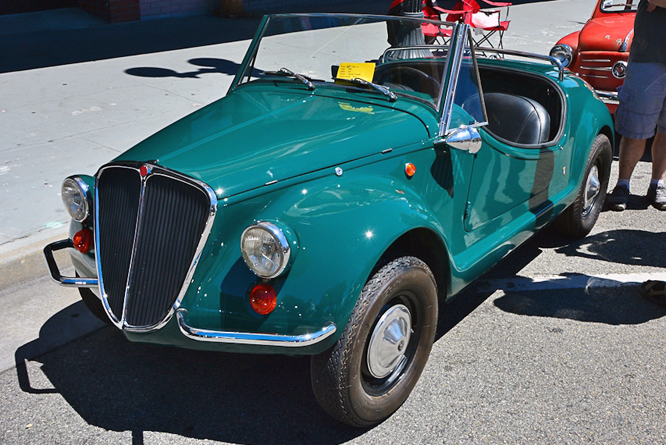
FIAT Vignale Garmine, The Little Car Show, City Of Marina

Based on the smaller FIAT 500 is the Viganle Garmine which was a pet project of designer Alfredo Vignale which bankrupted his coachworks business.

Thanks for joining me on this “The Little Car Show 2014″ edition of Gettin’ a li’l psycho on tyres”, I hope you will join me again for Americana Thursday tomorrow. Don’t forget to come back now !

Share

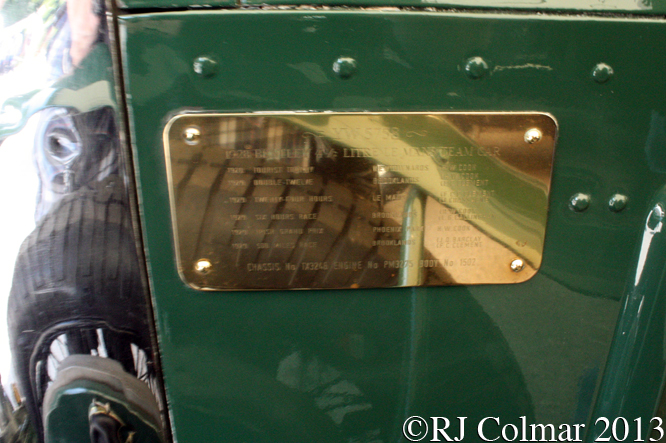
4th Of Four – Bentley 4 1/2 Litre #TX3246

Just as May is the month motorsport turns it’s attentions to the Indianapolis 500 and Monaco Grand Prix June is traditionally the sports interest focuses on the Le Mans 24 Hours. This month I have lined up 29 vehicles that either competed in the event, are of a type that competed in the event and or were designed to compete in the event but for one reason or another did not compete on the fastest roundabout in the world.

Humphrey Wyndham Cook is listed on the peerage.com as being born in 1893 to Wyndham Francis Cook and Frederica Evelyn Stillwell Freeland he attending Harrow on the Hill School and Christ Church, Oxford University.

Bentley 4 1/2 Litre, Goodwood Festival of Speed

Described as quiet and enthusiastic Humphrey started racing in 1914 and continued after The Great 1914/18 war racing Vauxhall’s and Bugatti’s mostly at Brooklands.

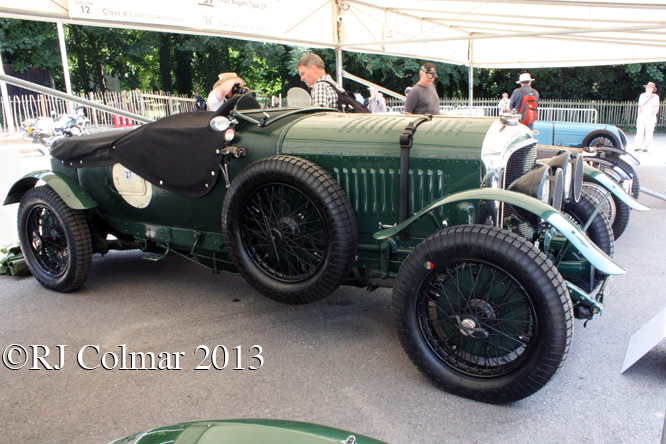
In 1928 he entered today’s featured car an unsupercharged 4 1/2 litre Bentley, chassis #TX3246 in the 1928 Tourist Trophy at Ards where he finished 7th.

Bentley 4 1/2 Litre, Goodwood Festival of Speed

The car next appears to have been entered by W.O. Bentley in to the Double Twelve at Brooklands, two 12 hour races being run in daylight on the same weekend, so as not to disturb the neighbors at night, in May 1929 where Humphrey and Frank Clement retired with a big end failure.

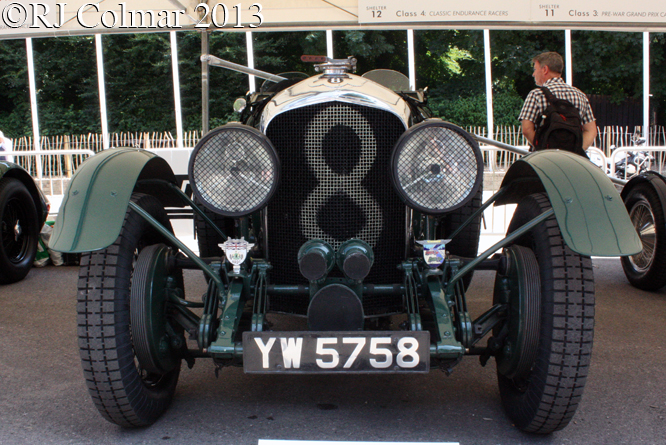
A month later and with the big end repaired #TX3246 powered by it’s original motor #PM3275 was entered into the Le Mans 24 Hour race by Bentley Motors Ltd for Frank Clement and Jean Chassagne to drive. Carrying the #8 They finished 4th completing a 1st to 4th place sweep for the Marque behind the Woolf Barnato and Henry Birkin driving the #1 Speed Six and the #9 and #10 4 1/2 litre cars driven by Jack Dunfee and Glen Kidston with Dr. Dudley Benjafield and André d’Erlanger in the latter.

Bentley 4 1/2 Litre, Goodwood Festival of Speed

Humphrey Cook and Leslie Callingham drove #TX3246 to a third place finish in the Brooklands 6 hour race at the end of June 1929 where a Bentley 1,2 finish interupted by an ALFA Romeo running in the 2 litre / 122cui class.

Two weeks later in the Irish GP Eireann Cup run at Phoenix Park Humphrey finished 5th before #TX3246 returned to Brooklands where Jack Barclay and Frank Clement drove her to victory lane in the Brooklands 500, the first race ever organised by the British Racing Drivers Club, BRDC, in October 1929.

Bentley 4 1/2 Litre, Goodwood Festival of Speed

Humphrey Cook went on to fund and race Raymond Mays and Peter Berthon’s English Racing Automobiles, ERA, project.

While Jack Barclay is still best known in London for his Rolls Royce and Bentley Dealerships in Mayfair.

Bentley 4 1/2 Litre, Goodwood Festival of Speed

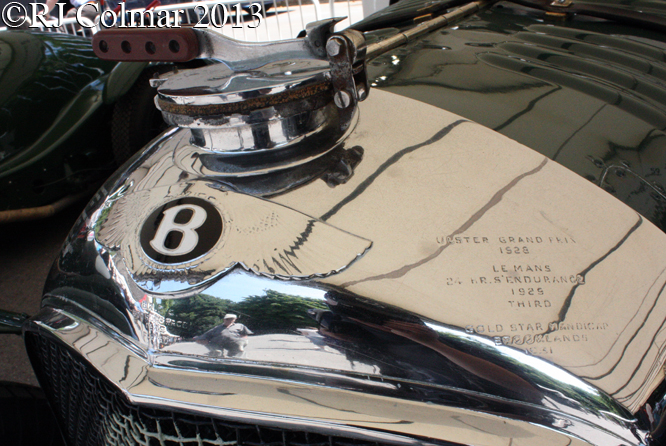
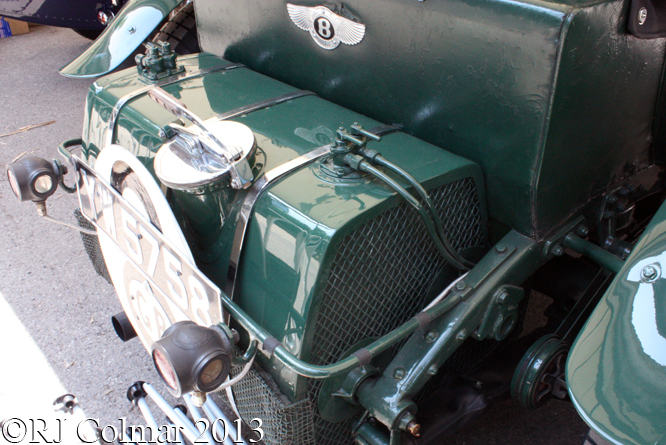
#TX3246 powered by the 4 1/2 litre motor number #PM3275 is seen in these photographs at Goodwood Festival of Speed last year.

Thanks for joining me on this “4th Of Four” edition of “Getting A Little Psycho On Tyres” I hope you will join me again tomorrow. Don’t forget to come back now !
Share

Buckler Framed – Smith Special Mk2

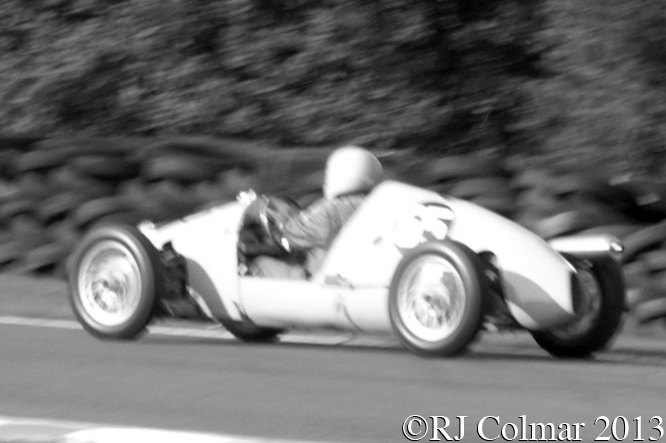
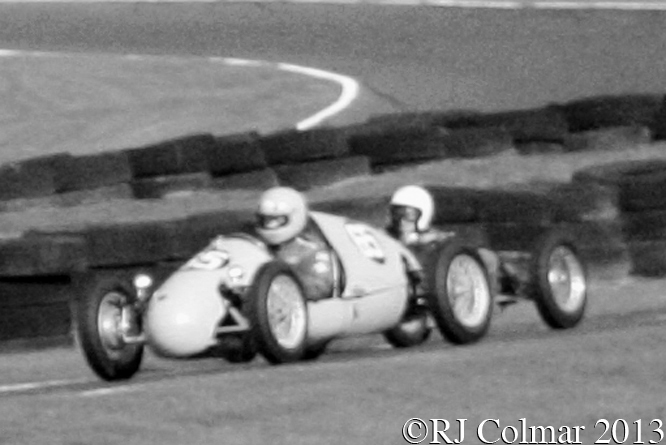
Over the coming Saturday’s I’ll be looking a few vehicles built by Buckler of Reading including today’s Smith Special Mk2 500 Formula 3 car for which Buckler built the space frame in 1950.

‘500’ Formula 3 was a low cost formula devised by a group of enthusiasts working for the Bristol Aeroplane Company during the 1939-45 war. After the cessation of hostilities the group organised an event at the wartime Silverstone Aerodrome in 1946 which had to decamp to the nearby grounds of Lord Hesketh where a hill climb was run for open wheelers with 500 cc / 30.5 cui motorcycle motors.

Ken Smith built his first Smith Special in 1948 to run in the class and after this was damaged at Brands Hatch in October 1950 Ken ordered a new one off frame from Buckler in Reading to build the Smith Special Mk2.

Smith Special Mk2, de la Roche, Oulton Park

The 9′ 10″ car with the chain drive Norton transmission was powered by a mid mounted Norton twin cam shaft motor fed by two two fuel tanks one a 1 1/2 gallon gravity tank over the motor and another 7 1/4 gallon saddle tank mounted over the drivers legs from which fuel was directed to the gravity tank by a fuel pump.

The suspension featured upper transverse leaf springs and lower wishbones, the road wheels, front brakes, steering box, steering column and track rods were sourced from a FIAT while the brake master cylinder and rear brakes were sourced from a Morris.

Smith Special Mk2, de la Roche, Oulton Park

Ken Smith drove the car from 1951 to 1954 during which time if it finished it usually finished in the top six, more often than not in the top 3 which included several wins of which the 1953 Autosport Non production Car Trophy was it’s last in Ken’s hands.

These photo’s show the car being driven by present owner Richard de La Roche at the Oulton Park Gold Cup meeting last year, more detailed information on the Smith Special can be found on this link. I hope to be returning with a fuller history of ‘500’ Formula 3 towards the end of the year when the ‘500’ Formula 3 class cars will returning to Castle Combe for the first time since 1955 to compete for the “Bristol Aeroplane Company Motor Sports Club Challenge Trophy”, owned by the Bristol Pegasus Motor Club, on Sunday the 5th of October.

Thanks for joining me on this “Buckler Framed” edition of “Gettin’ a li’l psycho on tyres”, I hope you will join me again tomorrow when I’ll be looking at a Formula One car built by one of New Zealands most accomplished race car drivers. Don’t forget to come back now !

Share

Just Waiting – Ferrari 500/625A/750 #3/2/0482

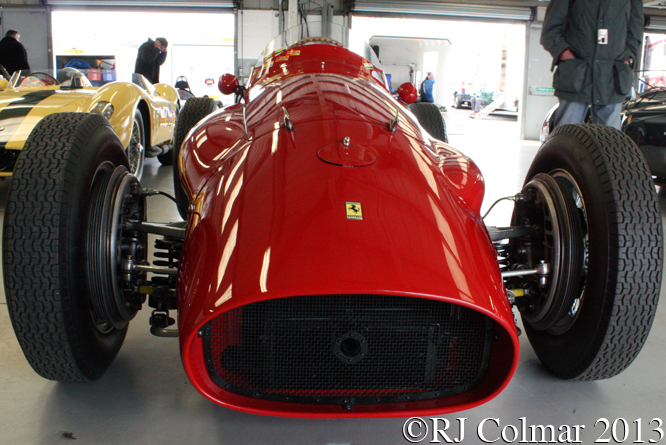
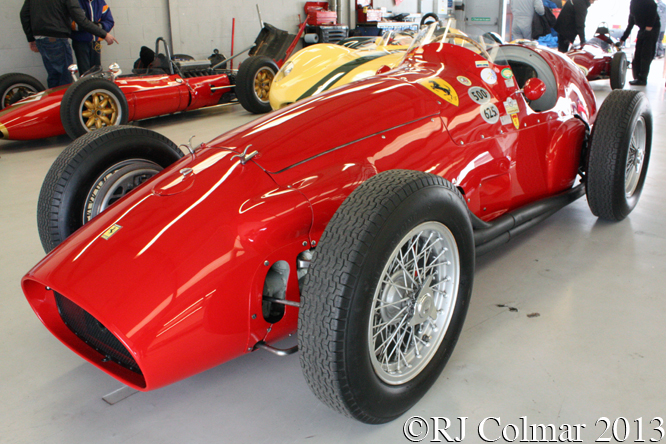
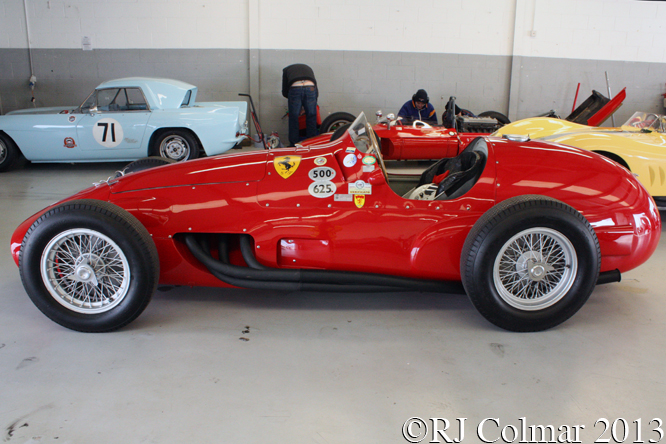
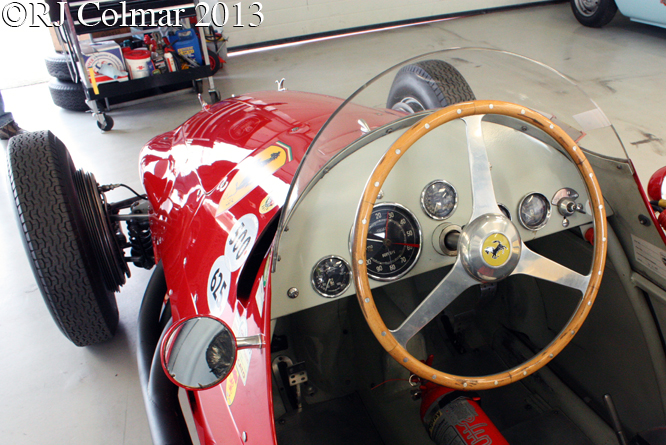
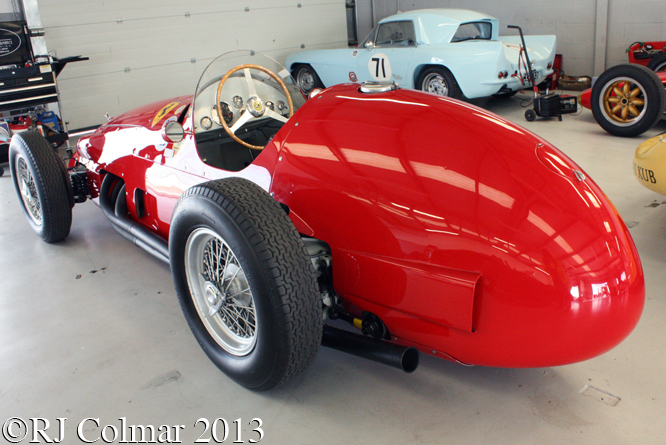
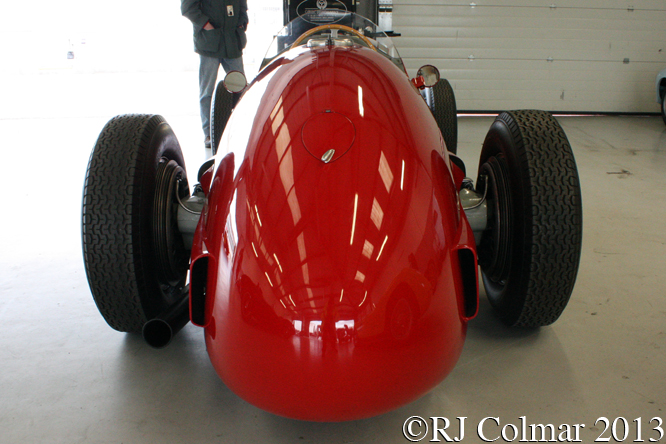
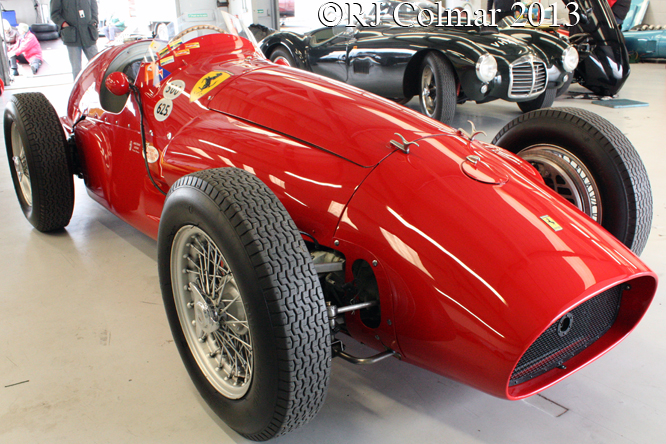
Wondering around the pits at Silverstone during an HGPCA test day a couple of months ago I was overwhelmed by the sheer number of cars just waiting for their stories to be told, one such was today’s featured Ferrari which was built in 1952 as a 4 cylinder 2 litre / 122 cui Ferrari 500 chassis #3 for the Formula 2 season which was also designated as the World Drivers Championship Formula.

Ferrari 500/625 A/750, HGPCA Test Day, Silverstone

This car is said to have raced alongside the sister chassis #005 raced by Alberto Ascari to two consecutive World Drivers Championships, though I have yet to discover who drove it or the results it achieved.

Ferrari 500/625 A/750, HGPCA Test Day, Silverstone

In 1954 new Formula One regulations were adopted for the World Drivers Championship mandating 2.5 litre / 152 cui motors and when Ferrari ran into problems with it’s intended ‘Squalo’ 553 challenger they converted some of the old Formula 2 cars to “625” specification with larger 2.5 litre / 152 cui 4 cylinder motor. This particular car then became a 625 with the chassis number 2.

Ferrari 500/625 A/750, HGPCA Test Day, Silverstone

With no progress on the Squalo and later 555 Super Squalo designs Ferrari updated this car further to 625A spec for the start of the 1955 season with a more aerodynamic tail, the chassis was lengthened by just under two inches, the additional length being inserted by cutting the chassis just ahead of the cockpit and the suspension was revised with coil springs replacing the transverse leaf spring at the front.

Ferrari 500/625 A/750, HGPCA Test Day, Silverstone

The cars first race of the 1955 World Drivers Championship season was in Argentina, which lent it’s initial to the 625 designation. Two 625A’s were entered and they finished second and third behind reigning champion Juan Manuel Fangio’s Mercedes Benz. Unusually the two 625A’s were each driven by three drivers coming in second were Gonzalez, Farina and Trintignant and third were Maglioli who shared with Trintignant and Farina !

Ferrari 500/625 A/750, HGPCA Test Day, Silverstone

The next race was at Monaco where Maurice Trintignant qualified today’s featured car 9th behind a pair of Mercedes Benz cars, three Lancia D50’s and three Maserati’s. During the race Trintignant, for whom everything outside racing was ‘just waiting’, guided his car to an unlikely victory as those ahead retired with mechanical issues while the Lancia driven by Ascari famously fell into the water which he survived only to be killed four days later testing a Ferrari sports car at Monza.

Ferrari 500/625 A/750, HGPCA Test Day, Silverstone

The 1955 Monaco victory was the first World Drivers Championship event to be won by a Frenchman since it’s inception in 1950, the first to be one on Englebert Tyres and Ferrari’s only victory in the 1955 Championship season. At the end of the year the car was fitted with a 4 cylinder 3 litre / 183 cui Ferrari 750 sportscar motor and sold to British wool merchant and amateur racer Peter Whitehead, with Peters old customer chassis number #0482 to compete in the unrestricted Formula Libre races being held in New Zealand in 1956. Peter won both the Lady Wigram Trophy and the Southland Road Race, note some sources incorrectly point to this car being driven by Peter Whitehead to two victories in New Zealand in 1957, by then he was actually drove and won both races with in a Ferrari Super Squallo 555 fitted with an 3.4 litre 860 Monza sports car motor.

Ferrari 500/625 A/750, HGPCA Test Day, Silverstone

Late in 1956 Froilan Gonzales bought the car and took it to Argentina where it appears to have remained until it resurfaced in the United States in the 1990’s. Current owner Alexander Boswell bought the car in 1999 and found the three chassis numbers which confirmed the cars identity and history welded one atop the other.

Mr Boswell had the car restored to the same 3 litre / 183 cui 625A/750 #0482 specification as it was when supplied to Peter Whitehead by Ferrari for his New Zealand adventure.

Thanks for joining me for this “Just Waiting” edition of “Gettin’ a li’l psycho on tyres” I hope you will join me again tomorrow. Don’t forget to come back now !
Share

The Kiwi Bear Corrections – McLaren Offy M15

Firstly a big thanks to racer Jerry Entin who kindly corrected a blog I posted a couple of years ago about Denis Hulme’s participation in the 1970 Indy 500 and has kindly sent some additional photo’s from the IMS Archive to complete the story.

McLaren Offy M15, Indy 500

Photo Courtesy Jerry Entin and IMS Archive 1970

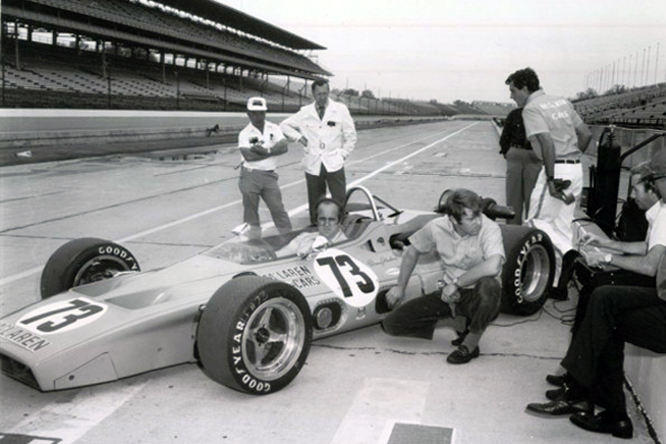
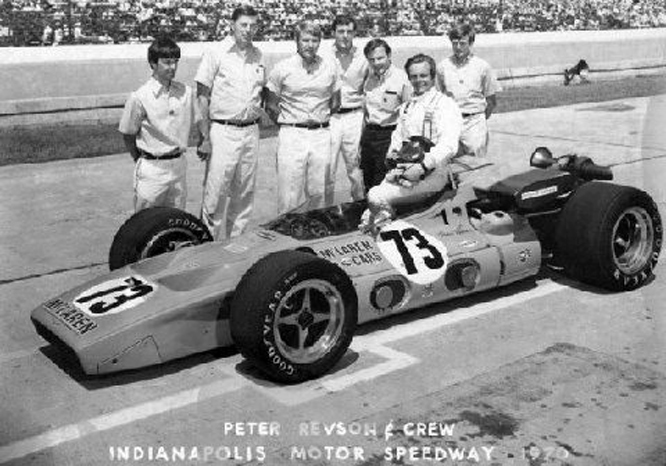
For 1970 Bruce McLaren had Gordon Coppock design the first McLaren Indy 500 challenger, above the #73 McLaren Offy M15 is seen in the Indy pit lane with Denny at the wheel, Tyler Alexander crouched beside him and Teddy Mayer with clip board on the pit wall. Jerry tells me the little guy in the back ground is Chickie Hirashima a well known crew chief and Offy engine builder.

McLaren Offy M15, Indy 500

Photo Courtesy Jerry Entin and IMS Archive 1970

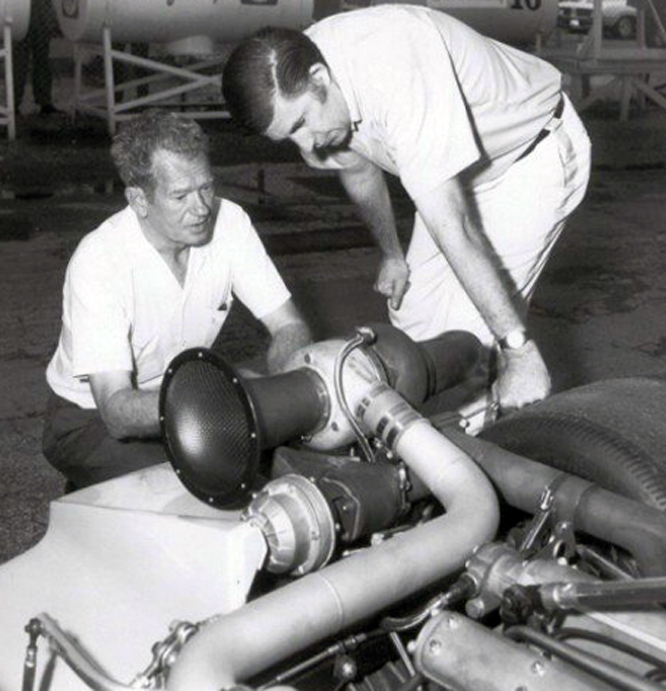
The turbocharged Offenhauser’s that McLaren used were prepared by George Bolthoff (R) with help from the legendary Herb “Herbie Horsepower” Porter (L) of Speedway Engines.

McLaren Offy M15, Indy 500

Photo Courtesy Steve Arnaudin Copyright Ed Arnaudin 1970

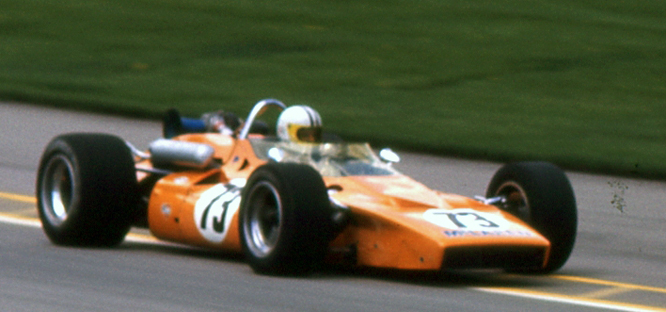
Ed Arnaudin’s photo above show’s New Zealander Denny taking part in practice,

McLaren Offy M15, Indy 500

Photo Courtesy Jerry Entin and IMS Archive 1970

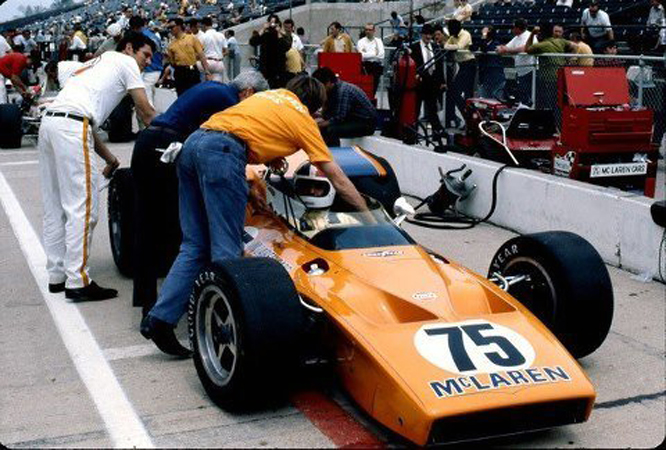
his team mate in the #75 McLaren Offy M15 was to have been fellow New Zealander Chris Amon with whom team owner Bruce McLaren had won the 1966 Le Mans 24 Hours driving a Ford GT40.

McLaren Offy M15, Indy 500

Photo Courtesy Jerry Entin and IMS Archive 1970

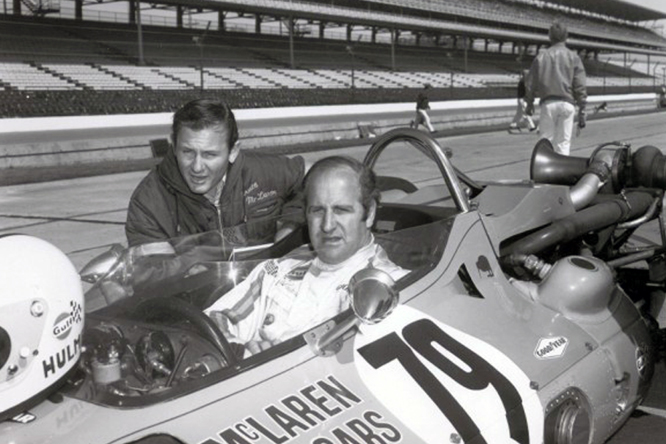
Team owner Bruce McLaren, seen above squatting next to Denny, had tested the #79 M15 making a big impression driving in convoy with his #73 and #75 entries on the opening day of practice for the 1970 Indy 500 and Denny was to shake down the #79 back up car to cover all eventualities.

McLaren Offy M15, Indy 500

Photo Courtesy Jerry Entin and IMS Archive 1970

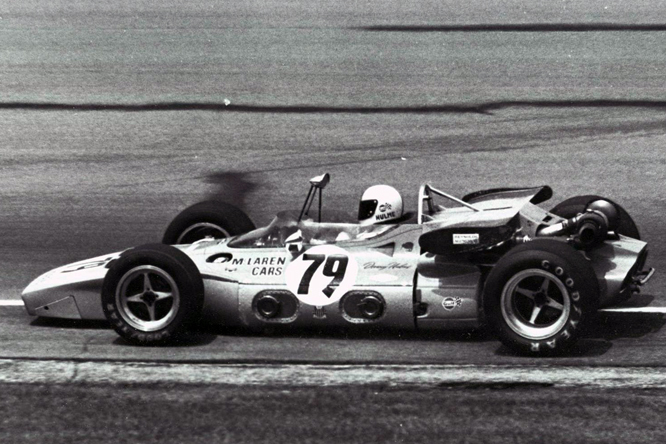
However the #79 developed a methanol fuel leak,

McLaren Offy M15, Indy 500

Photo Courtesy Jerry Entin and IMS Archive 1970

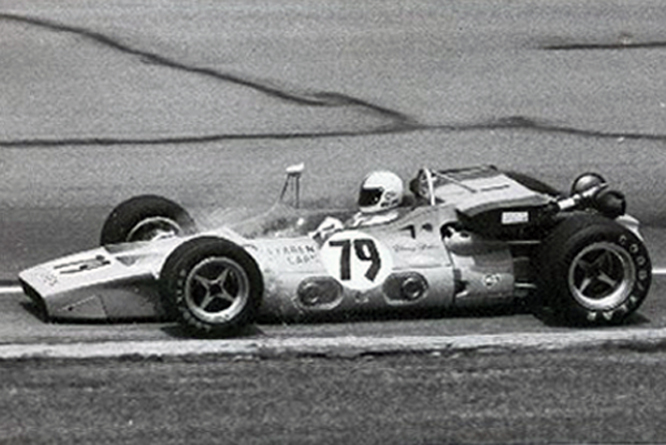
which caught fire, the only evidence of the fire in the photo above is the clearly visible heat haze above the far front wheel as Denny prepares to jump and roll away from his car which was still traveling at 70 mph.

McLaren Offy M15, Indy 500

Photo Courtesy Jerry Entin and IMS Archive 1970

Denny received severe burns to his hands which forced him to miss the Indy 500 and the next two Grand Prix however within a month he was back behind of the wheel of his McLaren Chevrolet M8D Can Am car winning the series with six race victories, a string of three third place finishes also helped Denny secure 4th place in the world drivers championship all while his hands were still healing.

McLaren Offy M15, Indy 500

Photo Courtesy Jerry Entin and IMS Archive 1970

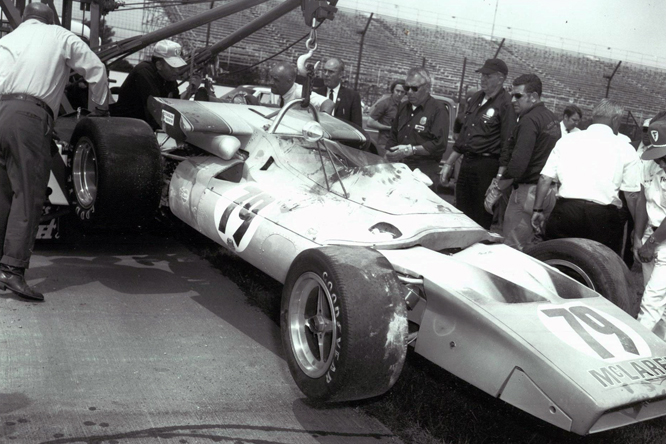
Teddy Mayer engaged Peter Revson to replace Denny in the #73 for the Indy 500, Peter qualified 16th but retired and was classified 22nd.

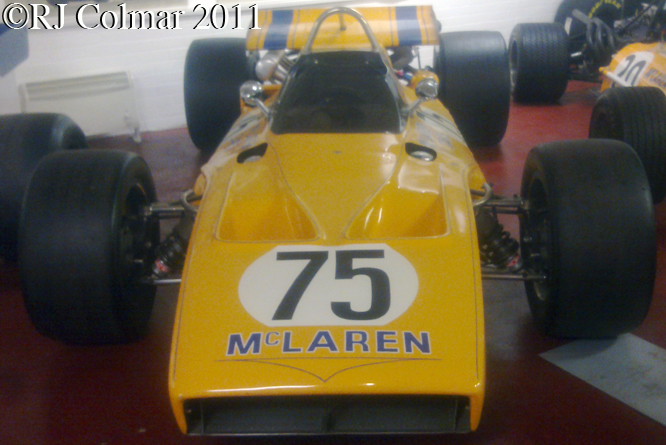
McLaren Offy M15, Donington Park Museum

On seeing the extent of his countryman Denny’s injuries Chris Amon was not impressed with the Indy safety facilities and withdrew from the race.

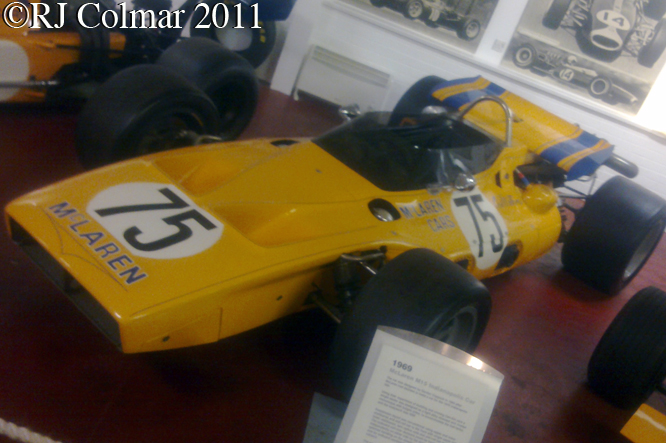
McLaren Offy M15, Donington Park Museum

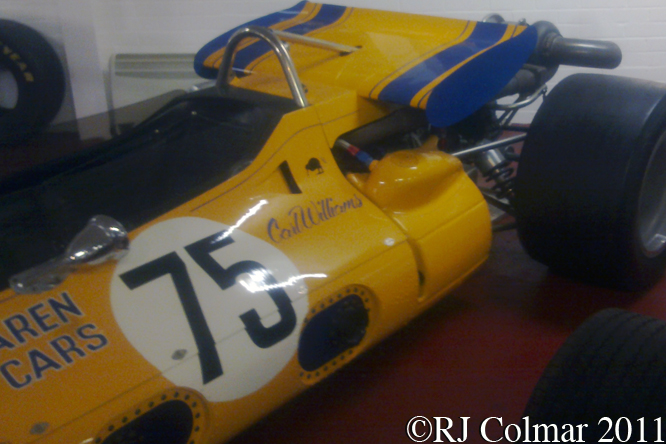
Chris’s place in the #75 was taken by Carl Williams who qualified 19th and brought the car home 8th to record McLaren’s first finish in the Indy 500. The teams next design the M16 would become the class of the field in early 1970’s taking wins with Mark Donohue driving in 1972 and Johnny Rutherford in 1974 and 1976.

McLaren Offy M15, Donington Park Museum

However team owner Bruce McLaren would not see any of these success he was killed a couple of days after the 1970 Indy 500 testing a McLaren Chevrolet M8D Can Am car at Goodwood. Team manager Teddy Mayer took over the running of the Bruce’s legacy which is now the second oldest team in Grand Prix racing behind Ferrari.

My thanks to Jerry Entin, IMS Archive, Ed and Steve Arnaudin who made today’s blog possible and apologies for any confusion caused by getting the car Denny was driving when he got injured wrong in the original post.

Thanks for joining me on this “The Kiwi Bear Corrections” edition of “Gettin’ a li’l psycho on tyres” I hope you will join me again tomorrow. Don’t forget to come back now !
Share

Last British 2 Seat MG – MG TF

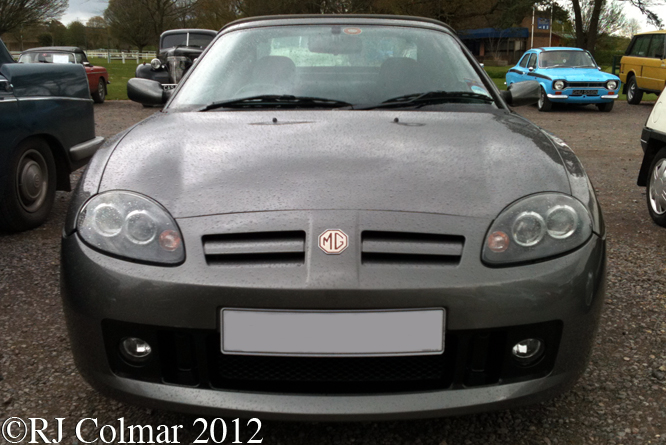
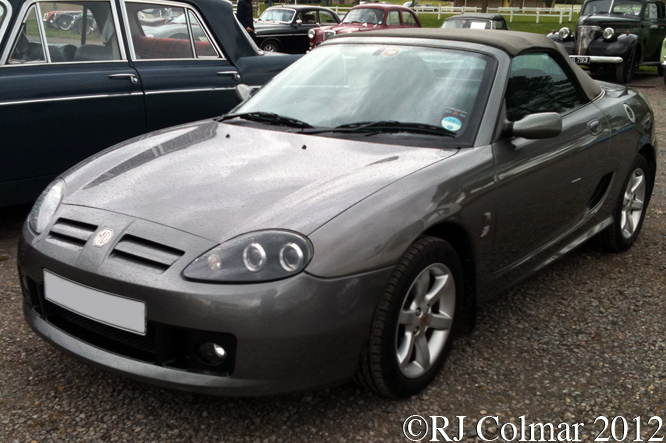
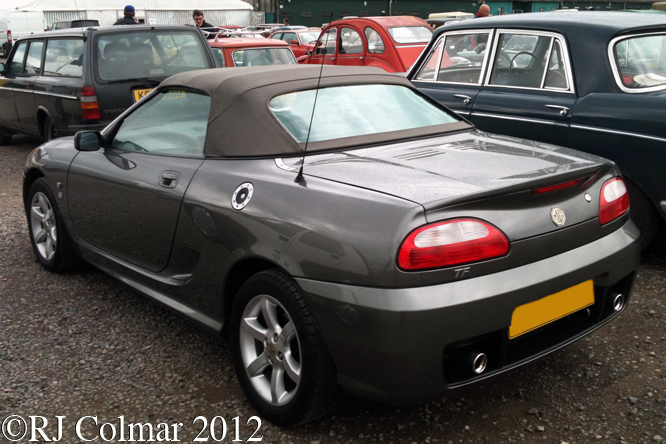
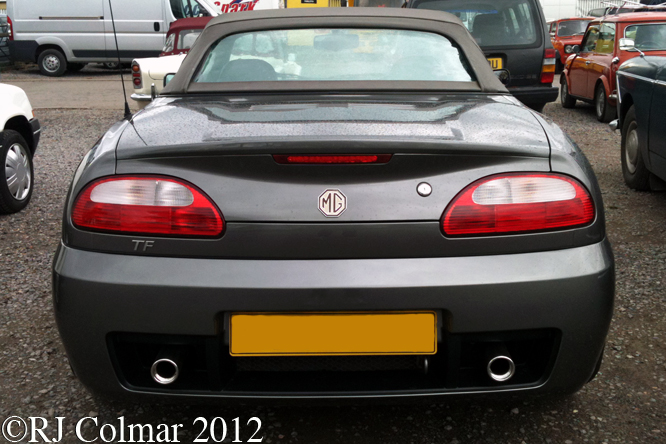
When MG Rover face lifted the mid engined MG F sports car in 2002 they gave it the same TF name as last seen on the 1955 MG TF Midget. Little did they know at the time that this would become the last new British 2 seat MG to reach market.

MG TF, Bristol Classic Car Show, Shepton Mallet

Many of the face lift details were carried over from the MG TF XPower 500 Concept Car first seen at Le Mans in 2001.

MG TF, Bristol Classic Car Show, Shepton Mallet

Despite it’s overall styling which dated back to 1995 the MG TF matched it’s rivals from Mazda (MX5) and Toyota (MR2) in handling, performance and held it’s own in the domestic sales league.

MG TF, Bristol Classic Car Show, Shepton Mallet

However the TF’s mid mounted Rover K series motor was subject to numerous head gasket failures until a new multi layered item was designed which cured this particular issue.

MG TF, Bristol Classic Car Show, Shepton Mallet

Production of MG TF’s ceased when Rover MG went bankrupt in 2005 but restarted in the UK from Chinese supplied Complete Kockdown Kits (CKD) in 2008 after new owners Nanjing had transferred all the TF production assets to China. 906 CKD TF’s were built before production ceased for good in 2011.

Thanks for this “Last British 2 Seat MG” edition of “Gettin’ a li’l psycho on tyres” I hope you will join me again tomorrow. Don’t forget to come back now !
Share

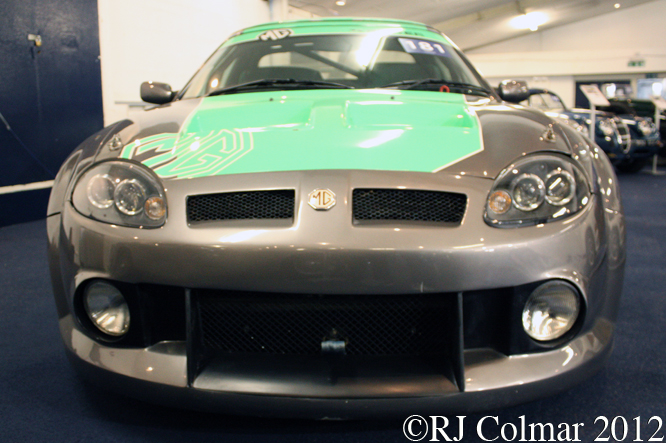
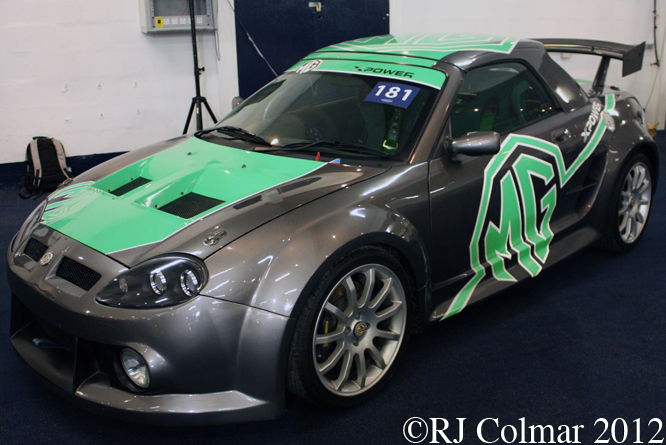
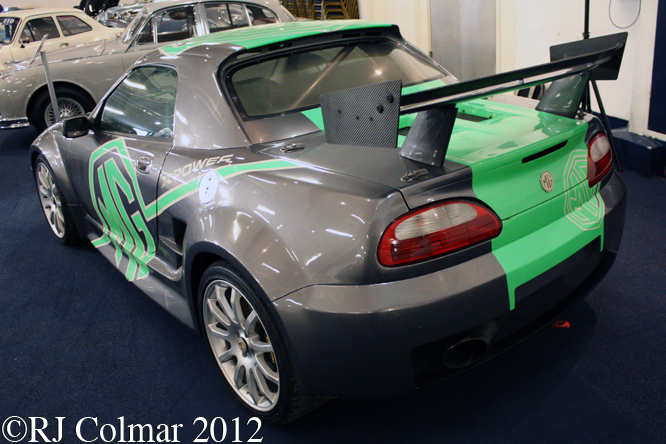
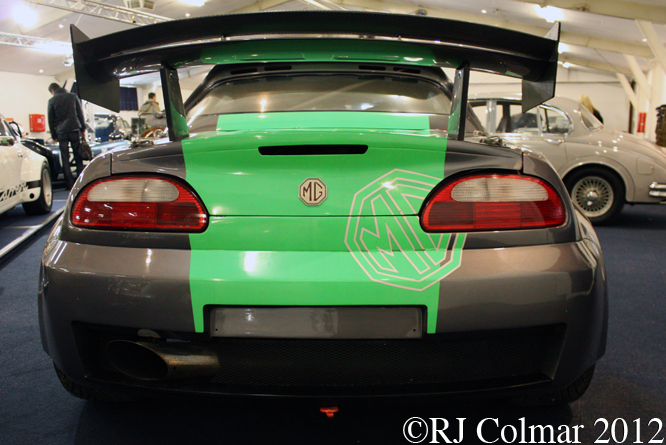
Rocket Powered Unicycle – MG TF XPower 500 #SARRDWBGBWD034240

Just like I write “Gettin a li’l psycho on tyres”, because I find it quite irresistable it would appear when MG Rover got ditched by BMW MG went and built today’s unique, as in only one of, MG TF XPower 500 for exactly the same reason.

MG TF XPower 500, Silverstone Auctions, Race Retro, Stoneleigh

Sensational and equally outrageuous the MG TF XPower 500, was first shown to the public at Le Mans in 2001 alongside it’s Lola LM780 chassis Le Mans challenger.

MG TF XPower 500, Silverstone Auctions, Race Retro, Stoneleigh

Sitting on low profile 17″ road tyres and wheels the MG TF XPower 500 has a seam welded MG TF body which incorporates a racing standard survival cell, flared wheel arches and some aerodynamic aids to help keep the car on the ground.

MG TF XPower 500, Silverstone Auctions, Race Retro, Stoneleigh

Go for the MG TF XPower 500 comes from the same source as MG’s Lola MG Le Mans challenger namely a mid monunted Cosworth 2000 Le Mans XP20 2 litre / 122cui 4 cylinder turbo charged motor that produces 400 hp which transmits its power to the rear wheels through a 6 speed X-Trac sequential gearbox. Racing 4 pot AP disc brakes are used to slow the car down which has a ‘theoretical’ top speed in excess of 180 mph depending on the gear ratio’s used.

MG TF XPower 500, Silverstone Auctions, Race Retro, Stoneleigh

When Tony Dron tested the car with former Le Mans winner Mark Blundell he obseved the front wheels don’t do much in the corners and he was advised by Mark to suggest “Just think of the back end”. Tony noted “He’s right: imagine a rocket-powered unicycle and you get the idea.”

Thanks for joining me on this “Rocket Powered Unicycle” edition of “Gettin’ a li’l psycho on tyres”, I hope you will join me again tomorrow. Don’t forget to come back now !
Share